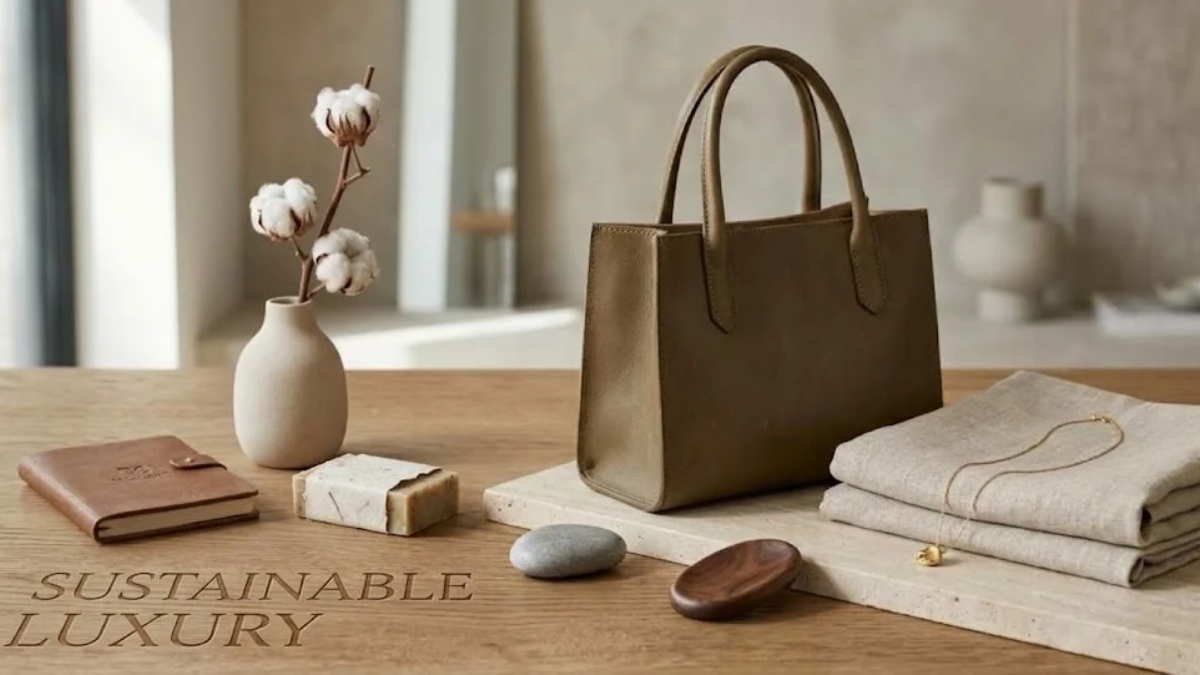
Sustainable luxury combines premium quality, thoughtful craftsmanship, and lasting design with responsible environmental and social practices. It encourages consumers to look beyond a prestigious label or expensive price tag and consider how a product is made, where its materials come from, how long it will last, and what happens when it is no longer needed.
The idea extends beyond luxury fashion. It applies to jewelry, furniture, beauty products, travel, architecture, and other premium experiences. Although no product is automatically sustainable because it is expensive or beautifully made, luxury can offer opportunities to prioritize durability, repairability, traceable materials, and long-term value.
What Is Sustainable Luxury?
Sustainable luxury is an approach to premium products and experiences that seeks to balance quality and desirability with environmental responsibility, ethical production, and long-term usefulness.
Traditional luxury is often associated with exclusivity, exceptional materials, skilled craftsmanship, and distinctive design. Sustainable luxury retains these qualities while asking additional questions about resource use, working conditions, production waste, and product longevity.
For example, a well-made leather bag might offer years of use if it is designed for durability and supported by reliable repair services. However, its environmental and ethical credentials also depend on factors such as leather sourcing, tanning methods, manufacturing practices, and transportation. Craftsmanship alone does not establish that the bag is sustainable.
This distinction matters because sustainability is not a single feature. It is a collection of practices that must be assessed across a product’s life cycle.
Why Does Sustainable Luxury Matter?
Premium products can involve valuable raw materials, complex supply chains, specialized manufacturing, packaging, and international transportation. Their environmental and social effects depend on how those activities are managed.
Sustainable luxury encourages brands to consider these impacts instead of focusing exclusively on appearance, exclusivity, or sales.
It also gives consumers a reason to think more carefully before purchasing. Buying fewer products that serve a genuine need, caring for them properly, and keeping them in use for longer may reduce unnecessary replacement. The result depends on actual product use and the alternatives being considered, so sustainability claims should not be treated as automatic outcomes.
For businesses, credible sustainability practices can also improve transparency and strengthen relationships with customers who want more information about the products they buy.
The Main Principles of Sustainable Luxury
1. Responsible Materials and Ethical Sourcing
Materials influence a product’s environmental footprint, durability, and social impact. Sustainable luxury brands may explore recycled metals, responsibly sourced natural materials, lower-impact textiles, and production methods designed to reduce waste.
The right choice depends on the product. Recycled material is not automatically better in every situation, and natural materials are not necessarily environmentally harmless. Water consumption, chemical processing, land use, durability, and end-of-life options all matter.
Traceability is equally important. A brand that provides meaningful information about the origin of its materials gives consumers a better basis for evaluating its claims. Broad phrases such as “consciously made” are less useful when they are not supported by specific evidence.
2. Craftsmanship and Long-Lasting Quality
Durability is one of the clearest ways luxury can support more responsible consumption. Products that remain useful, attractive, and functional for many years may reduce the need for repeated purchases.
Consider a dining table made with durable materials and constructed so damaged components can be repaired or replaced. If the owner continues using it for decades, the table may provide greater long-term value than a cheaper alternative that needs frequent replacement.
However, a high price does not guarantee longevity. Buyers should examine construction, material quality, maintenance requirements, warranties, and the availability of replacement parts.
Good design also matters. A timeless appearance may encourage continued use, although personal preferences and changing needs will always influence how long an item remains desirable.
3. Fair Working Conditions and Transparency
Environmental responsibility is only part of the picture. The people involved in growing, extracting, processing, transporting, and assembling materials also matter.
Responsible production requires attention to working conditions, fair treatment, occupational safety, and appropriate oversight throughout the supply chain.
Consumers can look for information about supplier standards, independent assessments, sourcing policies, and how a company responds when problems are identified. A general statement about ethical values is not the same as evidence of effective implementation.
No single report proves that every supplier or production facility meets the same standard. Transparency is most useful when companies explain both their progress and the limitations they are still working to address.
4. Repair, Resale, and Circular Design
Sustainable luxury does not have to mean buying a newly manufactured product. Repair, second-hand purchasing, refurbishment, and resale can keep existing items in circulation.
A luxury watch with an established maintenance service, for instance, may remain functional for generations. A pre-owned designer jacket can provide years of use without requiring the production of another new jacket. These options can be attractive when the item is authentic, in suitable condition, and practical to maintain.
Circular design considers what happens after the initial sale. Can a product be repaired? Are spare parts available? Can materials be recovered? Does the brand offer a credible take-back or resale program?
Research on luxury product repair has identified practical barriers such as inconvenience, waiting time, and limited consumer awareness. This illustrates why offering a repair service is not enough by itself; the service must also be accessible and useful.
Sustainable Luxury Across Different Industries
Sustainable Luxury Fashion
Fashion provides visible examples of sustainable luxury through durable garments, responsible material sourcing, repair services, resale, and designs intended to remain wearable beyond a single season.
Consumers can assess fabric composition, stitching, care instructions, supplier information, and the availability of alterations or repairs. Buying a second-hand garment in good condition may also be a useful option.
Still, claims about organic, recycled, or natural fabrics should be evaluated in context. The full production process and expected product life matter alongside the material label.
Ethical Luxury Jewelry
Luxury jewelry raises questions about precious metals, gemstones, mining, processing, and supply-chain transparency.
Recycled gold may reduce the need for newly mined material, while documented sourcing information can help buyers investigate a gemstone’s origin. Yet neither a recycled-metal claim nor a responsible-sourcing statement proves that every environmental and social concern has been resolved.
Ask the seller what the claim covers, whether supporting documentation is available, and whether independent verification applies to the specific item being purchased.
Sustainable Luxury Homes and Interiors
In interior design, sustainable luxury can involve durable furniture, repairable finishes, efficient lighting, thoughtful insulation, and materials selected with maintenance and longevity in mind.
A beautifully designed home is not automatically environmentally responsible. Heating and cooling needs, construction materials, water use, indoor air quality, and the replacement cycle of furnishings all influence its overall impact.
Choosing adaptable furniture and maintaining existing pieces can sometimes be more practical than replacing everything to follow a new design trend.
Responsible Beauty and Travel
Premium beauty products can be assessed through ingredient sourcing, packaging, refill options, product safety, and manufacturing transparency. Refillable packaging may reduce material waste when the refill system is practical and actually reused.
Luxury travel presents a different set of questions. Accommodation design, energy and water consumption, transport, local employment, and effects on nearby communities all deserve attention. A luxurious experience should not be described as sustainable merely because it includes nature, wellness, or locally inspired design.
Benefits and Limitations of Sustainable Luxury
The main potential benefit is the opportunity to combine quality with more considered consumption. Durable products, repair services, responsible sourcing, and resale options can support longer use and give consumers more information about their purchases.
Other benefits may include less avoidable waste, stronger product-care practices, and improved visibility into how goods are produced.
There are limitations, too. Responsible materials and specialist manufacturing can involve higher costs, while detailed supply-chain information may be incomplete. Some products are difficult to recycle, and premium packaging or resource-intensive production can undermine otherwise positive features.
The word “sustainable” should therefore be understood as a claim requiring evidence, not a guarantee of zero environmental impact.
How to Identify Truly Sustainable Luxury Products
A practical way to evaluate a luxury purchase is to examine five areas before deciding.
First, investigate materials. Find out what the product contains, where key materials originate, and whether environmental or sourcing claims are supported by documentation.
Second, assess construction and lifespan. Look at the quality of workmanship, care requirements, repair options, and expected usefulness. Consider whether the item suits your actual needs rather than a temporary trend.
Third, examine the people and processes behind it. Check whether the company explains its supplier standards, manufacturing practices, and approach to environmental and social responsibility.
Fourth, check what happens after purchase. A warranty, repair service, resale option, or practical recycling route can make a meaningful difference to the product’s long-term use.
Fifth, compare specific evidence rather than general promises. Independent certification can help when it applies to the relevant product, material, or process. Read what the certification actually covers instead of assuming it verifies the entire supply chain.
A simple comparison can help. Imagine two premium coats: one has detailed material information and an accessible repair service; the other relies on broad sustainability language but provides little supporting evidence. The first offers a stronger basis for an informed decision, even if its overall environmental impact has not been independently established.
This is a useful distinction between documented responsibility and attractive marketing.
Common Misconceptions About Sustainable Luxury
One misconception is that expensive products are automatically better for the environment. Price can reflect craftsmanship, design, brand positioning, or scarcity, none of which independently proves sustainability.
Another is that every recycled or natural material is environmentally superior. Impacts vary according to sourcing, processing, product performance, and disposal.
Some shoppers also assume that buying second-hand always eliminates environmental harm. Resale can extend a product’s life, but transport, refurbishment, packaging, and the effect on new purchases may influence the overall outcome.
Finally, sustainability does not require perfection to be meaningful. A company may be improving a specific part of its operations while still facing substantial challenges elsewhere. Its claims should be judged according to the evidence and the scope of the improvement.
How to Make More Responsible Luxury Choices
Start with the items you genuinely need or expect to use for a long time. Consider whether repairing an existing possession or buying a well-maintained second-hand item would meet that need before purchasing something new.
When buying new, compare materials, workmanship, care requirements, sourcing information, and after-sales support. Do not rely exclusively on a brand’s reputation or the appearance of its packaging.
It is also worth considering the cost over the expected useful life of an item. A product with a higher purchase price may provide good value if it lasts considerably longer and remains repairable, but that advantage should be assessed rather than assumed.
For consumers, the most practical approach is to seek credible evidence, buy thoughtfully, and maintain what they own. For brands, the challenge is to make responsible production measurable, transparent, and accessible instead of treating sustainability as a decorative marketing message.
The Bottom Line
Sustainable luxury is best understood as a commitment to quality, longevity, responsible sourcing, and greater accountability. Its value lies not simply in how a product looks or what it costs, but in the decisions behind its creation and the way it is used over time.
Consumers do not need to rely on vague promises. By checking materials, manufacturing information, repair options, and evidence for sustainability claims, they can make more informed choices. The strongest approach is to choose products that meet real needs, remain useful for longer, and offer credible information about their environmental and social impact.
Comparison Table
The article benefits from a short practical comparison because readers may confuse premium branding with verified sustainability.
| Evaluation factor | Stronger evidence | Weaker evidence |
| Materials | Specific composition and sourcing details | Vague eco-friendly claims |
| Durability | Care instructions and repair support | Price used as proof of quality |
| Ethics | Documented supplier standards | General ethical statements without details |
| Product lifespan | Repair, reuse, or resale options | No clear after-sales support |
| Transparency | Specific claims with supporting evidence | Broad claims without a defined scope |
This is a decision-making framework, not an assessment of any particular brand or product.
Conclusion
Sustainable luxury offers a more thoughtful way to approach premium shopping by connecting quality and design with durability, responsible sourcing, and transparency. Consumers can make better-informed decisions by examining a product’s materials, production practices, lifespan, and repair options rather than relying on its price or branding. The most credible sustainability claims are specific, clearly defined, and supported by evidence.
You may also like: Wedding Bedroom Decoration Ideas
FAQs
What is the main idea behind sustainable luxury?
It combines premium quality and craftsmanship with efforts to reduce environmental harm, improve sourcing practices, and support responsible production.
Are luxury brands automatically sustainable?
No. A luxury label or high price does not establish environmental responsibility. Buyers should examine specific materials, manufacturing practices, sourcing information, and product-care options.
Is second-hand luxury more sustainable than buying new?
It can extend the useful life of an existing product and reduce the need for new production. The overall benefit depends on factors such as refurbishment, transportation, product condition, and whether the purchase replaces a new item.
How can consumers verify sustainable luxury claims?
Look for detailed sourcing information, relevant independent certifications, transparent supplier policies, and evidence about the particular product or process. Check what each claim actually covers.
Is sustainable luxury more expensive?
It can be, but prices vary considerably. Consider purchase price, durability, repair costs, maintenance, and expected useful life rather than assuming that an expensive product offers better long-term value.
Share this content: