Consider the new-age wind farms, grid upgrades, refinery shutdowns, or solar installations. They all operate on tight timelines, variable deliverables, and sudden demand for diverse expertise. This pressure has pushed many energy firms towards more flexible staffing solutions.
These staffing agencies can support sudden labor demands to ensure the internal teams don’t break under pressure. With an experienced energy recruitment agency, you get a partner for your business that helps bridge talent gaps when the timelines shift midway.
Why is Energy Hiring Complex?
Energy projects can seem complicated, especially for hiring teams, as they expand and contract in phases. For example, a construction project may require hiring dozens of technicians for a few months. Alternatively, maintenance work may call for highly specialized engineers on very short notice.
The old way of hiring permanent teams for every fluctuation creates unnecessary overhead that isn’t feasible. That’s where flexible workforce models become indispensable across the sector. Temporary and contract staffing solutions give companies the flexibility to respond quickly when workload increases.
Hiring teams rely on an energy recruitment agency for:
- Quick profile shortlisting
- Pre-vetted talent pool
- Multiple communication touchpoints between candidates and your team
- EPC and commissioning support
- Plant shutdown staffing
- Installation experts for renewable energy systems
- Grid modernization project leads
- Remote-site technical hiring
Instead of spending months sourcing talent internally, these agencies quickly bring in trained professionals as demand arises. They are already familiar with energy operations and compliance requirements, so their expertise is particularly useful when shortlisting the right talent.
Renewable expansion is changing workforce planning
The hiring conversation clearly looks different today than it did a few years ago.
- Solar, wind, and transmission projects now demand technical workers with highly specific industrial experience.
- Many companies still face shortages across the core engineering and field operations roles.
To tackle this, businesses now rely on an energy recruitment agency to shorten the hiring timelines. This also reduces the downtime between project stages.
Here are several trends that impact workforce planning across the energy sector:
- Faster renewable energy expansion
- Growing demand for contract-based specialists
- Hiring needs outside the major metro regions
- Greater focus on compliance and safety readiness
Companies also want hiring models that can adjust and respond quickly. This is because flexibility is crucial when projects move faster than your team expected or when the project budgets change midway through delivery.
Project Delays Start With Workforce Gaps
Labor shortages eventually affect the project schedules and costs. In many cases, the overtime costs pile up and operational efficiency declines. In large-scale energy projects, specifically, even a small delay in mobilizing the right workers can create downstream setbacks across contractors and vendors.
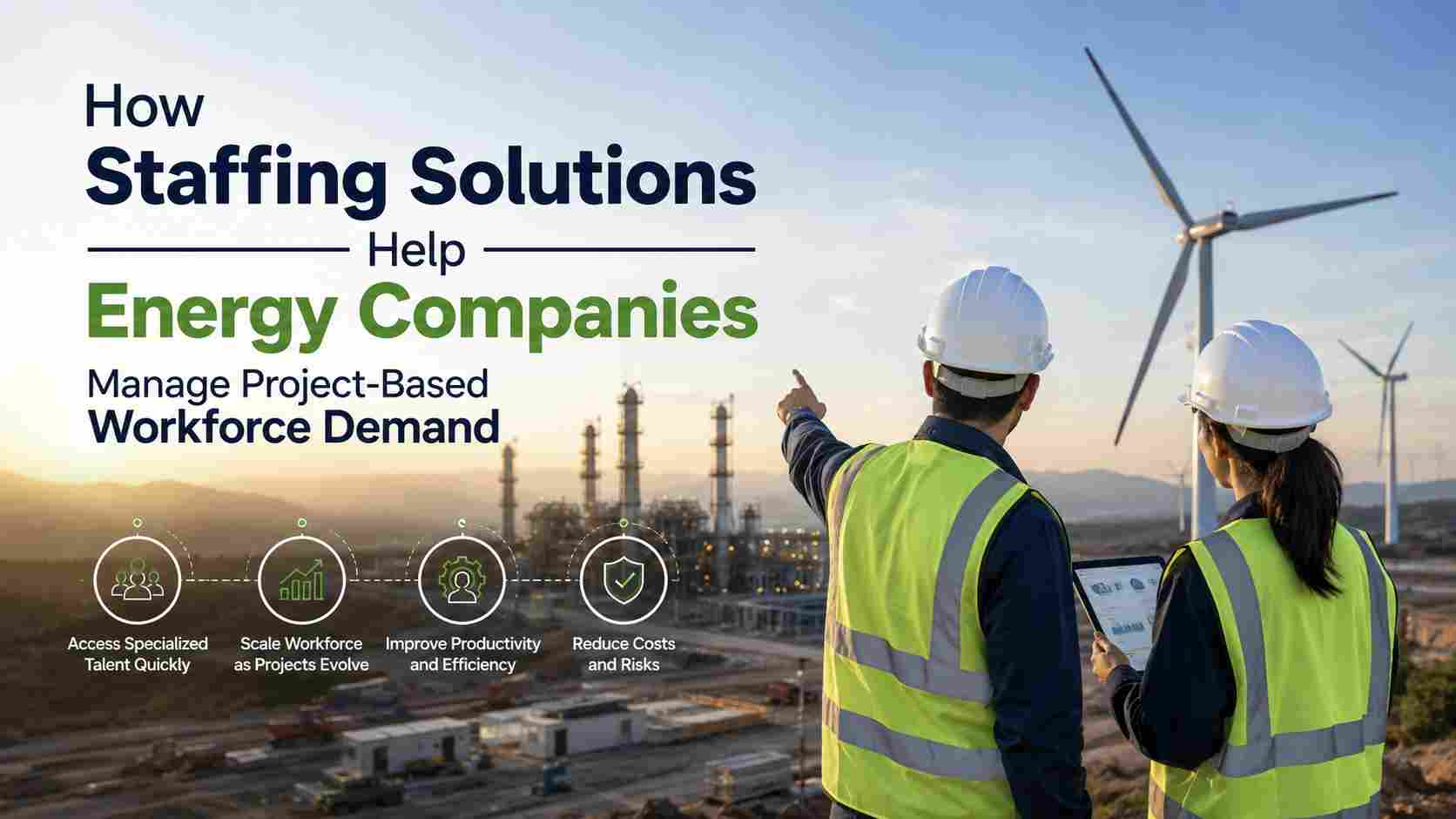
That directly explains why many firms now treat workforce planning as part of project risk management. Today, hiring requires flexible staffing solutions to:
- Scale their team up or down during different project phases
- Gain faster access to pre-screened technical professionals
- Reduce the excessive administrative hiring pressure
- Keep the internal teams focused on core business operations
- Manage compliance requirements more efficiently
Conclusion
Hiring well-suited candidates for energy-sector roles now calls for updated workforce models. Ones that can move in line with project cycles, technology changes, and regional labor demands. That shift alone explains the growing dependence on customizable staffing solutions and specialized hiring support.
For many energy project leaders, workforce flexibility translates into better cost control, faster project delivery, and reduced pressure on the internal team.
Share this content: