
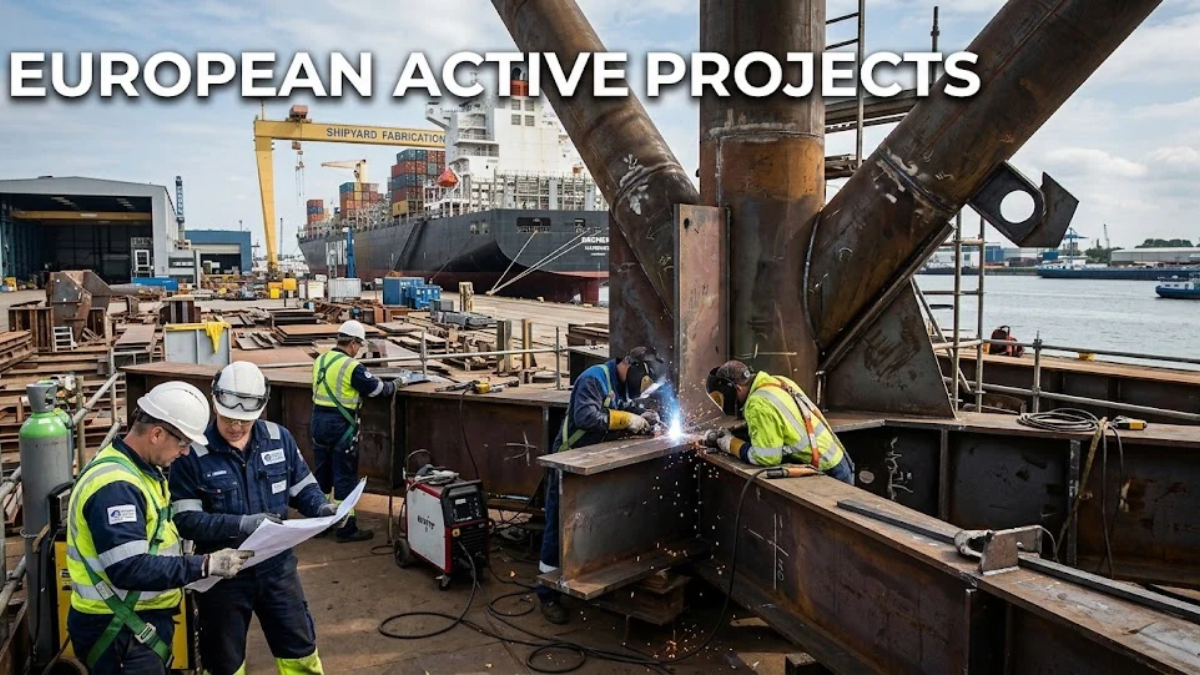
European Active Projects Ltd is a UK-based marine and industrial engineering company providing fabrication, repair, engineering, project, and workforce-support services across the UK and Europe. Its published services cover marine fabrication, steel fabrication, electrical and mechanical engineering, design services, resource management, and mobile plant repair.
What is European Active Projects Ltd?
European Active Projects Ltd, commonly referred to as EAPL, is a private limited company incorporated in the United Kingdom in 2005. Companies House currently records the company as active, with business activities including manufacture of metal structures, repair of fabricated metal products, ship and boat repair and maintenance, and employment-placement activities.
The company’s own description focuses on engineering projects for marine and industrial customers. EAPL says its work can range from shipbuilding and ship repairs to facility projects, land-based engineering and component manufacturing, with project management and resource support included where appropriate.
That breadth matters because an engineering job rarely ends with fabrication alone. Depending on the project, a customer may need design input, materials, skilled labour, welding, installation, repairs, testing or ongoing maintenance.
What services does European Active Projects provide?
EAPL publishes several service categories rather than concentrating on one narrow type of fabrication. Its service portfolio includes marine fabrication, steel fabrication, electrical engineering, mechanical engineering, design services, resource management and mobile plant repair.
This creates an important distinction for potential customers: the company is not presented simply as a steel workshop. Its website positions it as a project-support contractor capable of combining different engineering disciplines.
Marine fabrication and ship repair
Marine work is one of EAPL’s central areas. The company’s marine fabrication page describes ship repair and conversion, dredger, Ro-Ro and ferry maintenance, pontoon and gangway manufacture, harbour works, wind-farm support, lock-gate repairs, marine electrical work, scaffolding and other specialist project services.
EAPL also operates a non-tidal wet berth at its Chatham facility, which the company says supports ship repair work for operators in the English Channel and North Sea.
The type of work illustrated in EAPL’s published projects includes vessel bulkhead repairs, crane-seating fabrication, marine welding and other structural work. For example, one published project involved fabricating and installing replacement crane seating on a vessel, while another involved insert-plate repairs to restore a vessel bulkhead.
Steel fabrication and installation
Steel fabrication is another major part of the company’s offering. EAPL says it can deliver fabrication and installation for both marine and land-based work, from smaller repairs through to larger projects.
Its published project examples show how broad this can be. Recent work has included structural steel packages, bespoke frames, steel railings, support structures, crane components and other fabricated items. The company has also documented a London project involving the fabrication and delivery of 47 structural steel beams.
A useful way to understand this service is to separate fabrication from project delivery. A customer does not necessarily need only finished steel. The wider requirement can involve drawings, measurements, material procurement, fabrication, transportation, and installation.
Electrical and mechanical engineering
EAPL also provides electrical and mechanical engineering support for marine and land-based projects. Its services page states that these capabilities can support both project environments rather than being limited to a single marine application.
This can be particularly relevant when structural work interacts with existing machinery, plant or vessel systems. In such situations, coordination between trades can become as important as the individual fabrication task.
Design, resource management and mobile plant repair
Design services are listed alongside the engineering disciplines, while resource management allows EAPL to provide skilled personnel for businesses experiencing peak demand or needing additional workforce capacity.
The company’s mobile plant repair service is described as an on-site repair and maintenance capability available around the clock.
These services broaden the potential project model. A customer may need a complete defined project, specialist site support, or additional skilled personnel rather than a traditional workshop-only service.
Where does European Active Projects operate?
EAPL’s locations page currently lists facilities and operating locations including Chatham, Falmouth, Glasgow, Hull, the North East, Peterlee, Plymouth, Romania, Rosyth and Southampton.
Chatham is described by EAPL as the company’s main bay, with a non-tidal wet berth, dockside crane and manufacturing facilities.
The wider network serves different purposes. EAPL says its Glasgow operation supports new-build ships in the region, while Southampton provides engineering support to marine, construction, waste and food-packaging industries. Its Romania branch in Constanta was established to support workforce requirements for UK yards.
The geographic model therefore appears designed around project access rather than a single centralized workshop.
What types of projects does EAPL handle?
The strongest evidence comes from EAPL’s own published project archive. Rather than describing only broad capabilities, the archive contains specific examples of work completed or underway.
Recent entries include flood-gate replacement, bespoke vessel platforms, crane-stopper fabrication, steel structures, marine welding, structural steel packages, bulkhead plating, pier-panel replacement and specialist vessel work.
One recent structural project involved repairing and replacing steel beams supporting a ship-to-shore conveyor system. EAPL says the work included scaffolding, containment, water blasting, removal of defective beams, crane lifts, installation of replacement beams and repainting. The company reports that Stage 1 was completed and that work was progressing toward Phase 2.
Another example is a petrol-tank modification project in Shoreham involving design development, procurement, fabrication and installation work, including bespoke manways and stainless-steel fuel lines.
These examples demonstrate why looking at actual project descriptions is more informative than judging an engineering contractor from a service list alone.
What is different about an integrated project model?
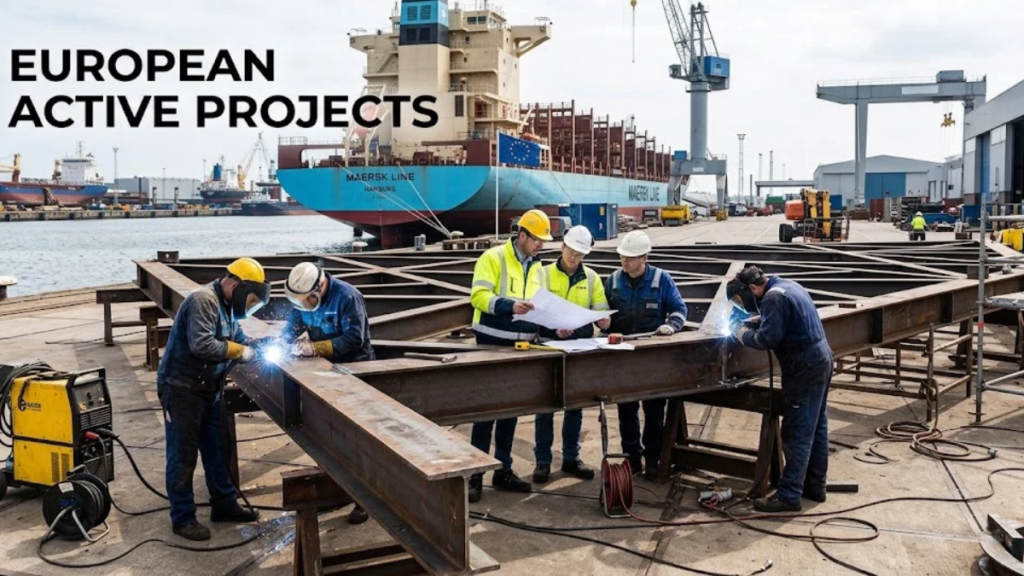
EAPL describes fixed-price project work as one of its core business models and says it can source skilled labour, tools and materials to complete defined project scopes.
An integrated contractor model can reduce the number of separate parties a customer must coordinate. Instead of arranging fabrication with one supplier, site labour with another and specialist engineering with a third, some projects can be structured around a single project-management relationship.
That does not automatically make an integrated model appropriate for every project. A specialist subcontractor may be preferable where the work requires a very specific certification, technology or local capability that the main contractor does not provide directly.
The practical question is therefore not simply, “Can the contractor fabricate steel?” It is, “Can the contractor manage the complete scope I actually need?”
What should a customer check before appointing an engineering contractor?
Before a project starts, the scope should be documented clearly. At minimum, a buyer should establish the drawings or specifications to be used, material requirements, fabrication tolerances, installation responsibilities, inspection requirements, site access conditions and expected completion dates.
For marine work, the scope may also need to address vessel access, dry-dock or berth arrangements, class requirements, lifting operations, hot-work controls and the interaction between ship operations and repair work.
A well-defined scope also makes commercial comparison easier. Two quotations can appear similar while covering very different amounts of labour, engineering, materials, testing and installation.
When is an integrated contractor useful?
An integrated contractor can make particular sense when a project combines several connected disciplines.
For example, a vessel repair might require structural steel work, welding, fabrication, lifting, installation and engineering coordination. A land-based industrial project may similarly require steelwork, plant repairs and site installation.
The key advantage is coordination rather than simply the number of services listed on a website.
However, customers should still evaluate the exact project team, proposed scope, programme, deliverables, quality controls and commercial terms rather than assuming that a broad service portfolio automatically fits their specific requirements.
What are the limitations to consider?
Company websites are useful starting points, but they do not provide every detail a procurement team needs.
EAPL publishes many project examples, but the publicly available pages do not establish that every service is available at every location, nor do they provide standard pricing for all project types. Scope, location, timing, engineering requirements, and materials can substantially change the cost and delivery model.
That means a meaningful quotation should be based on the actual job rather than a generic online price.
Customers should also confirm current availability, applicable approvals, insurance, inspection requirements, site responsibilities,s and any customer-specific compliance requirements before work begins.
How should a project be evaluated before work starts?
A practical evaluation can be organized around five questions:
What is the exact scope?
Define the work, exclusions, materials, and final deliverables.
Where will the work happen?
Workshop, dockside, vessel, factory, or remote site can change the logistics considerably.
Who is responsible for what?
Clarify engineering, procurement, fabrication, installation, testing, and handover responsibilities.
How will quality be demonstrated?
Agree on inspection, documentation, welding, or fabrication requirements and acceptance criteria before production begins.
What happens when conditions change?
Marine and industrial environments can produce access, weather, design or operational challenges. The contract should explain how variations are handled.
This framework is more useful than selecting a contractor solely from a list of advertised services.
European Active Projects and recent project evidence
One of the most useful features of EAPL’s website is its project/news archive. Instead of relying only on general marketing language, the archive shows individual examples of fabrication, engineering, marine repair and industrial work.
For prospective customers, those examples can be used as a starting point for asking more specific questions: Has the contractor handled a similar material? Has it worked in comparable access conditions? Has it managed fabrication and installation together? Has it delivered similar structural or marine repairs?
The right comparison is not necessarily the biggest project. Similarity of engineering conditions is often more informative than headline project size.
What does European Active Projects offer?
European Active Projects Ltd presents itself as a UK and European marine and industrial engineering contractor with capabilities spanning fabrication, repair, engineering, design, workforce provision and project delivery. Its published locations cover a broad UK network with a European presence in Romania, while its project archive documents both marine and land-based work.
For someone researching European Active Projects, the most useful next step is to match the company’s documented capabilities and relevant project examples against the exact requirements of the proposed job.
The company itself cannot be evaluated properly from its name or service list alone. The better approach is to compare the required scope, site conditions, engineering disciplines, programme, documentation, commercial model, and relevant project experience before appointing a contractor.
Conclusion
European Active Projects Ltd is an established UK engineering company whose published work spans marine fabrication, ship repair, structural steel, engineering, design, resource support and industrial projects. Its current website provides service, location and recent-project information that gives prospective customers a useful starting point for assessing fit.
The strongest way to assess any project contractor is to move from general capability to specific evidence: comparable work, defined scope, technical requirements, responsibilities, schedule, quality documentation and commercial terms. That approach gives buyers a clearer basis for deciding whether a particular contractor matches the project.
You may also like: Probate
FAQs
Is European Active Projects Ltd a marine engineering company?
It operates across both marine and industrial engineering. Its published services include marine fabrication, steel fabrication, electrical and mechanical engineering, design, resource management and mobile plant repair.
Should I avoid European Active Projects if my project is land-based?
No conclusion should be made from the company name alone. EAPL publishes land-based projects and services alongside marine work, so a land project should be assessed against its specific scope, location and requirements.
What is the long-term value of using one engineering contractor?
The potential value is mainly coordination: fewer separate interfaces can simplify procurement and project management. Whether that creates a benefit depends on the complexity of the particular job.
What practical detail do customers often overlook?
The division of responsibility for drawings, procurement, lifting, installation, inspection, and final acceptance can be overlooked. Defining those responsibilities before fabrication begins can reduce ambiguity later.
How should I decide whether EAPL fits my project?
Compare your exact scope with EAPL’s published services and comparable project examples, then verify current capacity, technical requirements, documentation, programme and commercial terms directly with the company.
Share this content: