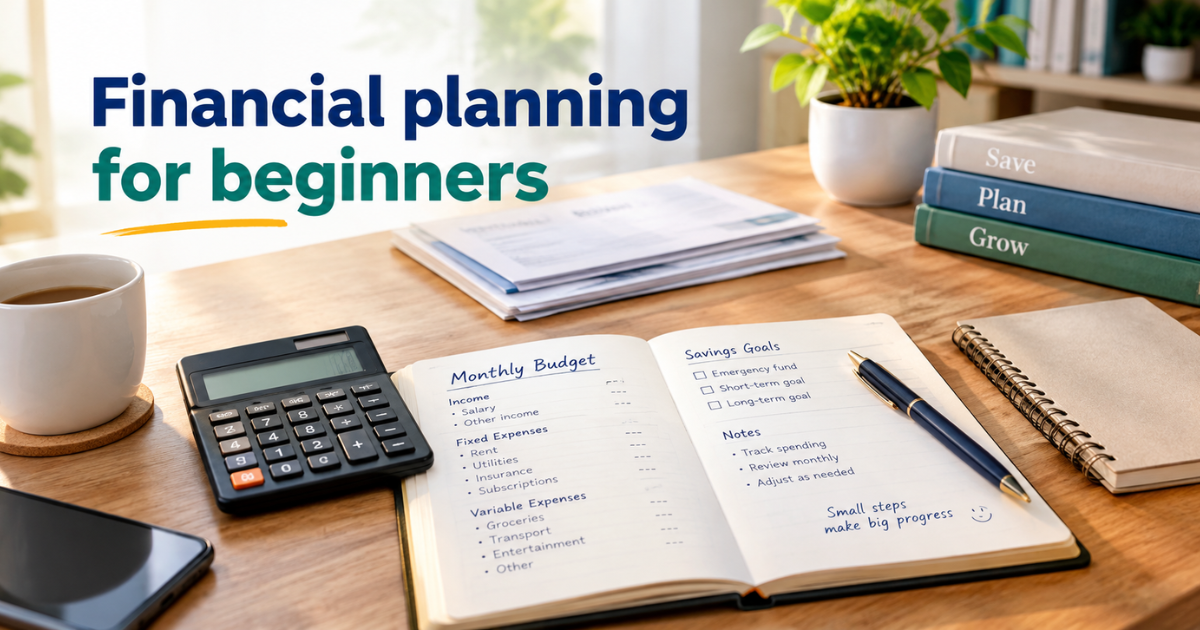
Financial planning for beginners is the process of organizing your income, expenses, savings, debt, and future goals into a practical money plan. You do not need a high income or advanced financial knowledge to begin; the first step is understanding where your money goes and deciding what matters most.
A financial plan helps you make deliberate decisions instead of handling every expense or financial goal separately. It can be as simple as a monthly spending plan and a savings target, then become more detailed as your financial situation develops.
What Is Financial Planning for Beginners?
Financial planning means creating a system for managing money today while preparing for future needs. It involves understanding your income, estimating expenses, setting goals, preparing for unexpected costs, and deciding how to use any money left over.
For a beginner, financial planning is not about immediately buying investments or following complicated financial strategies. It starts with basic money management.
For example, someone who earns a regular monthly income might need to pay rent, groceries, transport costs, bills, and debt payments. A practical plan helps that person identify fixed expenses, manage variable spending, save an affordable amount, and work toward future goals.
The exact priorities depend on income stability, existing debt, financial responsibilities, and local costs.
Why You Need a Financial Plan Before Chasing Wealth
A financial plan can help you understand whether your current spending supports your goals. It also makes it easier to recognize problems before they become more difficult to manage.
Suppose you want to save for education, a home, a business, or retirement. If you do not know how much you earn and spend, you may struggle to decide how much you can save or invest.
A plan does not guarantee wealth or prevent every financial problem. Its value is that it creates a repeatable process for making decisions, tracking progress, and adjusting when circumstances change.
The SEC’s investor education materials emphasize setting goals, living within your means, managing high-interest debt, building emergency savings, and investing consistently in a diversified, risk-appropriate plan. These are general educational principles, not a guarantee of investment returns.
Step 1: Understand Your Current Financial Position
Before creating a budget, collect the basic information needed to understand your financial situation.
Start with your regular income. Include salary, business income, freelance work, or other sources that you can reasonably verify. If your income changes from month to month, use a conservative planning estimate and account for months when earnings may be lower.
Next, list your expenses. Separate regular obligations, such as rent or loan payments, from flexible spending, such as entertainment, shopping, or dining out. Also identify irregular expenses, including annual fees, repairs, education costs, and other payments that may not appear every month.
Your financial snapshot should help you answer three questions:
How much money comes in? How much goes out? What obligations and goals require attention?
You can also list savings balances, debt amounts, and upcoming large expenses. Avoid treating an asset balance as spendable cash if you cannot access it easily or would face high costs by using it.
Step 2: Create a Budget That Reflects Real Life
A budget is a spending plan, not a punishment for buying something you enjoy. A useful budget should reflect your actual income, essential costs, financial obligations, and priorities.
Begin by recording your expenses for a typical month. If you do not have reliable records, track your spending for several weeks and review the results. The goal is to identify patterns rather than produce a perfect document.
One simple method is to divide expenses into three groups: essential needs, flexible spending, and financial priorities. Financial priorities can include savings, debt repayment, and contributions toward long-term goals.
Do not assume that a popular budgeting percentage works for every person. Someone with high housing costs, irregular income, or substantial debt may need a different allocation.
A budget should be reviewed when income, living costs, or responsibilities change. The CFPB provides educational tools for tracking income and bills, creating cash flow budgets, prioritizing bills, and working through debt-related decisions.
Step 3: Set Financial Goals You Can Measure
A financial goal is more useful when it identifies what you want, why it matters, and when you may need the money.
Instead of writing “save more,” define a specific objective. For example, you might want to build a reserve for unexpected expenses, save for a course, or prepare for a major purchase.
Divide goals into time horizons:
Short-term goals may involve upcoming bills, essential purchases, or a small savings reserve.
Medium-term goals may include education, relocation, a vehicle, or a business-related expense.
Long-term goals may involve retirement, long-term investing, or building financial independence.
The timeline influences how much risk you can reasonably consider. Money needed soon generally requires more attention to accessibility and potential losses than money intended for a distant goal. Investor.gov explains that investment choices should be considered in relation to goals, affordability, risk tolerance, and the time involved.
Step 4: Build an Emergency Fund
An emergency fund is money reserved for unexpected expenses or financial emergencies. It can help cover situations such as a repair, an unplanned bill, or a loss of income.
There is no single emergency fund amount that suits everyone. Your target depends on factors such as income stability, essential monthly expenses, household responsibilities, insurance coverage, and access to other resources.
If you currently have no savings, start with an amount that is realistic for your situation. A small reserve can be useful, and the target can be increased over time.
Keep emergency money somewhere safe and accessible according to your needs. Avoid placing money intended for an immediate emergency into investments that could lose value or be difficult to access when required.
The CFPB recommends setting aside money for unplanned expenses and describes strategies such as consistent contributions, cash-flow management, and automatic transfers. It also warns that automatic transfers should be monitored to avoid overdraft fees when account balances are insufficient.
Step 5: Manage Debt Before Taking Bigger Risks
Debt should be included in your financial plan rather than treated as a separate problem. Record each debt’s balance, interest rate, required payment, and due date.
High-interest debt deserves careful attention because interest can increase the cost of borrowing and reduce the money available for savings or other goals.
Consider your minimum payment obligations first, then assess a repayment strategy that fits your income and circumstances. Do not take on new borrowing simply to maintain a spending pattern that your income cannot support.
The Investor.gov wealth-building guidance advises people to manage high-interest debt, maintain an emergency fund, and consider long-term saving and investing as part of a broader plan.
If you are struggling to meet essential payments, the right next step may be reviewing expenses, contacting creditors, seeking qualified local debt advice, or addressing income instability before making investment decisions.
Step 6: Start Saving and Understand Investing
Saving and investing are related but different activities.
Saving generally involves setting money aside in an account or other suitable place for future use. It is often appropriate for emergency reserves and goals that require accessible funds.
Investing involves putting money into assets that may grow in value or generate income, but investment values can decline. The suitability of an investment depends on factors such as your goal, timeline, risk tolerance, costs, and local rules.
Beginners should avoid assuming that every investment is safe or that past performance guarantees future returns. Diversification can help reduce concentration risk, but it cannot eliminate losses.
Before investing, understand what you are buying, the fees involved, how easily you can access your money, and what could cause its value to fall. Investor.gov provides guidance on diversification, risk tolerance, investment fees, and researching investments.
A person should not feel pressured to invest immediately if they have urgent financial obligations or lack an appropriate emergency reserve. The decision depends on the full financial picture.
How to Adapt Your Plan to Irregular Income
A plan designed for a fixed salary may not work well for someone who earns money through freelancing, seasonal work, commissions, or business activity.
If your income changes, start by identifying essential expenses and the timing of incoming money. You may need to keep a larger cash buffer, plan for lower-income periods, or separate business funds from personal spending.
Instead of assuming that every month will produce the same earnings, use a planning approach that considers realistic income variation. When you receive more money than expected, decide in advance how much may go toward upcoming expenses, reserves, debt, or other goals.
Cash-flow management is particularly relevant when the timing of income and bills does not match. The CFPB identifies cash-flow tracking and adjusting payment timing as tools that may help people manage this challenge.
Common Financial Planning Mistakes to Avoid
One common mistake is setting an unrealistic savings target. A goal that repeatedly causes essential bills to go unpaid is not a sustainable plan.
Another mistake is focusing only on monthly spending while ignoring irregular expenses. Annual fees, repairs, and other occasional costs can disrupt a budget if they are not considered.
Some people also invest before understanding their risk tolerance, fees, and financial obligations. Others assume that a single budgeting rule applies equally to every income level and household.
A financial plan should be reviewed for practical problems, not just whether it looks organized. If your income falls, debt increases, or an unexpected expense occurs, update the plan rather than treating the original version as permanent.
How to Review and Improve Your Financial Plan
Review your financial plan regularly, such as once a month or after a significant change in income or expenses. A review should be short enough that you can maintain it consistently.
Check whether your income estimates remain realistic, whether essential bills were covered, and whether savings or debt payments were completed as planned. Identify one or two adjustments instead of trying to change everything at once.
As your situation improves, you may be able to increase savings, address additional debt, or work toward long-term goals. If circumstances become more difficult, prioritize essential obligations and reassess your plan.
A financial plan is a working document. Its effectiveness depends on whether it reflects your current situation and helps you make informed decisions.
When Professional Financial Advice May Help
General financial education cannot account for every person’s tax situation, legal obligations, debt structure, investment options, or financial goals.
You may benefit from qualified professional guidance when you face complicated tax questions, significant assets, retirement decisions, business finances, inheritance, or investment choices that you do not understand.
Before using a financial professional, ask about relevant qualifications, services, compensation, conflicts of interest, and the risks associated with any recommendation. Check applicable registration or regulatory information where available.
The Investor.gov preparedness checklist includes researching investment professionals, understanding investment fees, reviewing risk tolerance, and researching investments. The specific regulatory process depends on the country where you live.
Is Financial Planning Worth Starting With a Small Income?
Financial planning can still be useful when your income is limited, but the priority may be managing essential costs and financial stability rather than investing.
A small income does not automatically mean that every financial goal is achievable immediately. Your plan should recognize the actual costs of living, debt obligations, and available resources.
Start by understanding your cash flow and identifying a manageable action, such as tracking expenses, organizing bill dates, or setting aside a small amount when possible. As your circumstances change, update the plan.
The purpose of beginner financial planning is not to create a perfect financial life in one month. It is to develop a practical process for understanding money, making decisions, and adjusting over time.
Conclusion
Financial planning for beginners starts with understanding your money rather than trying to master every financial product. Create a realistic budget, identify your goals, build savings where possible, manage high-interest debt, and learn about investment risks before committing money.
Your financial plan should change as your income, expenses, responsibilities, and goals change. A simple plan that you understand and review regularly can be more practical than a complicated strategy you cannot maintain.
You may also like: How to Create a Daily Planner
FAQs
1. Can financial planning be harmful if I focus too much on saving?
Yes, an overly restrictive plan can become difficult to maintain and may neglect essential needs or reasonable spending. A useful plan should balance financial priorities with realistic living costs.
2. Should I avoid investing completely as a beginner?
Not necessarily. Learn the risks, costs, time horizon, and suitability of an investment before deciding. If urgent financial obligations or insufficient emergency savings are concerns, address those as part of your broader plan.
3. What is the long-term benefit of starting financial planning early?
Starting early gives you more time to build habits, save toward goals, and learn how financial decisions affect your future. Investment growth is not guaranteed, and outcomes depend on contributions, returns, costs, and risk.
4. What do beginners often overlook in a financial plan?
Irregular expenses, changing income, account fees, insurance needs, and the timing of bills are commonly overlooked areas. Reviewing cash flow can reveal problems that a basic monthly budget misses.
5. What should I do first if I have debt and no savings?
Begin by identifying essential expenses, required debt payments, and available cash flow. Consider building an initial reserve while addressing high-interest debt, but the right balance depends on your financial circumstances.
Share this content: