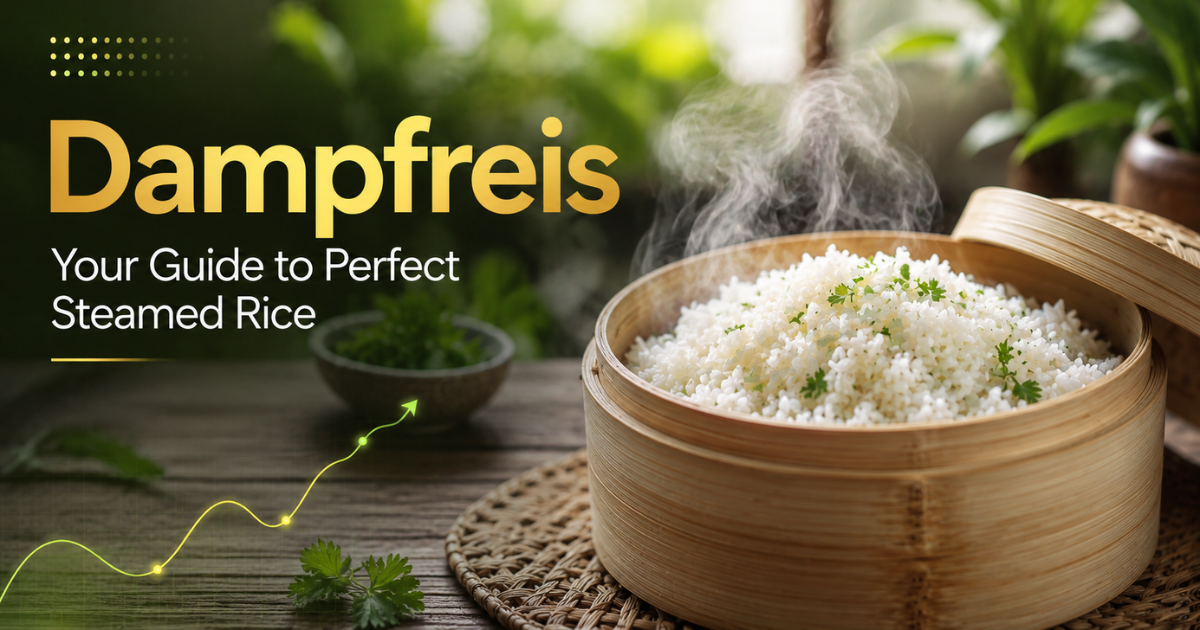
Dampfreis is a traditional method of preparing rice using steam instead of directly boiling the grains in excess water. This cooking technique helps create evenly cooked rice with better texture, cleaner flavour, and improved grain separation when done correctly.
Unlike ordinary boiling methods, Dampfreis relies on controlled steam and moisture circulation. The result is rice that maintains its structure while absorbing enough moisture to become soft and enjoyable.
What Is Dampfreis in Simple Terms?
Dampfreis literally refers to rice prepared with steam. Instead of allowing rice grains to sit fully submerged in water, the cooking process uses hot steam to transfer heat gradually.
This method is common in many traditional cuisines because steam allows more controlled cooking. The grains absorb moisture slowly, reducing the chance of overcooking.
Many professional kitchens use similar techniques because texture consistency matters. A well-prepared steamed rice dish should have separate grains, balanced moisture, and a natural aroma.
Why Dampfreis Matters in 2026
Modern cooking trends increasingly focus on healthier preparation methods, efficiency, and preserving food quality.
Dampfreis fits these trends because:
- It requires controlled water usage
- It preserves the natural texture of rice
- It can reduce overcooking
- It works well with different rice varieties
From practical implementation, many cooking failures happen because people focus only on ingredients and ignore moisture control. Rice quality depends heavily on temperature, timing, and steam distribution.
How Dampfreis Works in Real-World Cooking
The Science Behind Steam-Based Rice Cooking
Rice contains starch that changes structure when exposed to heat and moisture. During steaming, water gradually penetrates the grains while heat activates starch expansion.
The goal is balance:
- Too little moisture creates hard grains
- Too much moisture creates sticky rice
- Correct steaming produces soft but separated grains
Choosing the Right Rice Variety
Not every rice type behaves the same.
Good options include:
Basmati Rice
- Long grains
- Naturally aromatic
- Excellent separation
Jasmine Rice
- Softer texture
- Slightly sticky finish
Brown Rice
- More fibre
- Requires longer cooking time
A common mistake is using the same cooking method for every rice variety.
Step-by-Step Guide to Making Dampfreis
Step 1: Prepare the Rice
Wash the rice thoroughly to remove excess surface starch.
Many cooks skip this step, but rinsing helps improve texture and prevents unnecessary stickiness.
Step 2: Control Moisture
The amount of water and steam exposure determines the final result.
Professional kitchens usually measure ingredients carefully instead of relying only on visual estimation.
Step 3: Steam Slowly
Place the rice in a suitable steaming container and allow consistent heat circulation.
Avoid opening the lid frequently because escaping steam interrupts the cooking process.
Step 4: Rest Before Serving
After cooking, allow the rice to rest for several minutes.
This final stage helps moisture distribute evenly throughout the grains.
Real Workflow Example: Professional Dampfreis Preparation
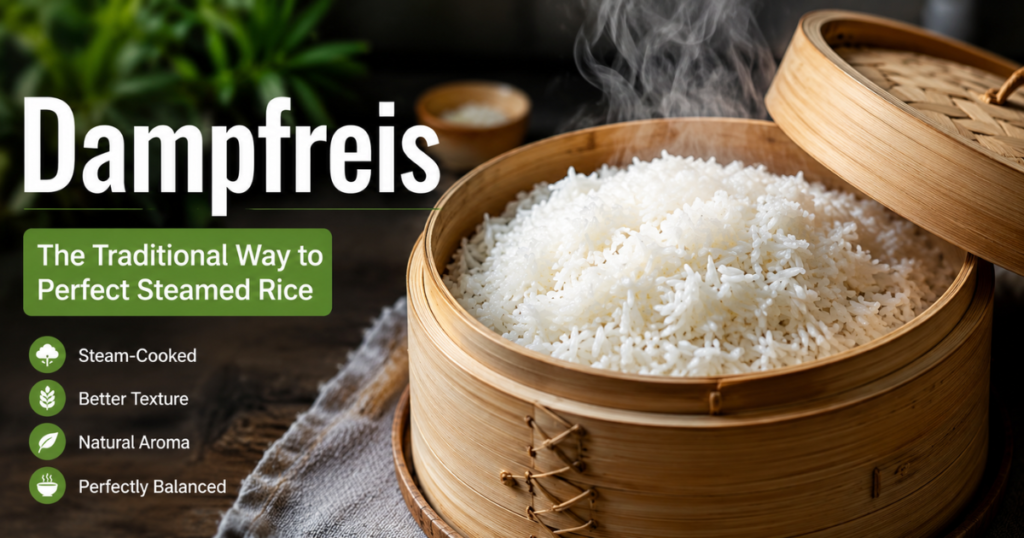
In real workflows, chefs often prepare rice in batches and focus on repeatability.
A typical process includes:
- Measuring rice portions
- Washing grains consistently
- Controlling steam temperature
- Checking texture before service
- Adjusting future batches
What many users miss is that excellent rice is not only about the recipe. It is about controlling variables.
Dampfreis vs Alternatives
| Feature | Dampfreis | Boiled Rice | Rice Cooker Rice |
| Cooking Method | Steam | Water immersion | Automated heating |
| Texture Control | High | Medium | Medium |
| Equipment Need | Moderate | Low | Low |
| Consistency | High with practice | Depends on ratio | High |
| Best For | Restaurants, texture-focused cooking | Everyday meals | Convenience |
Which Method Should You Choose?
Choose Dampfreis if:
- You value rice texture
- You cook frequently
- You want professional results
Choose boiling if:
- You need simplicity
- You cook occasionally
Choose a rice cooker if:
- Convenience matters most
Top Mistakes and Risks to Avoid
Using Too Much Water
Excess moisture creates soft, broken grains.
Ignoring Rice Type
Different grains require different cooking approaches.
Opening the Steamer Too Often
Steam loss affects cooking consistency.
Skipping Rest Time
Freshly cooked rice needs time to stabilise.
When Dampfreis Does Not Work Well
Dampfreis may not be ideal when:
- You need extremely fast preparation
- You lack proper steaming equipment
- You prefer very soft rice textures
Some dishes require intentionally wetter rice, making traditional boiling more suitable.
Advanced Strategies for Better Dampfreis
Experienced cooks improve results by:
- Measuring ingredients precisely
- Adjusting steaming time
- Testing different rice varieties
- Controlling resting periods
Based on practical usage, small adjustments often create larger improvements than changing recipes completely.
Dampfreis and Modern Cooking Technology in 2026
Technology is changing how people prepare traditional foods.
Smart kitchen devices now provide:
- Automated temperature control
- Sensor-based cooking
- Better consistency
AI-powered cooking assistants are also improving recipe recommendations by considering ingredients, preferences, and cooking history.
The future of rice preparation combines traditional methods with smarter monitoring.
Is Dampfreis Worth Trying in 2026?
Dampfreis is worth exploring for anyone who wants better rice texture, improved cooking control, and a more traditional preparation method.
It requires slightly more attention than simple boiling, but the results can justify the effort.
For home cooks, restaurants, and food enthusiasts, Dampfreis remains a valuable technique because it focuses on one important principle: controlling heat and moisture.
You may also like: Crocolini
FAQs
Is Dampfreis actually becoming less useful?
No. While modern appliances make rice preparation easier, controlled steaming remains valuable because it offers texture and consistency advantages.
Should I avoid Dampfreis?
You should not avoid it unless you need the fastest possible cooking method. It works best when texture quality matters.
Will Dampfreis become more popular long term?
Traditional cooking methods are gaining attention because people increasingly value authenticity, nutrition, and control.
Can beginners make Dampfreis successfully?
Yes. Beginners can achieve good results by controlling moisture, using suitable rice, and following timing carefully.
Does expensive equipment improve Dampfreis?
Equipment helps with consistency, but technique matters more than expensive tools.
Share this content: