
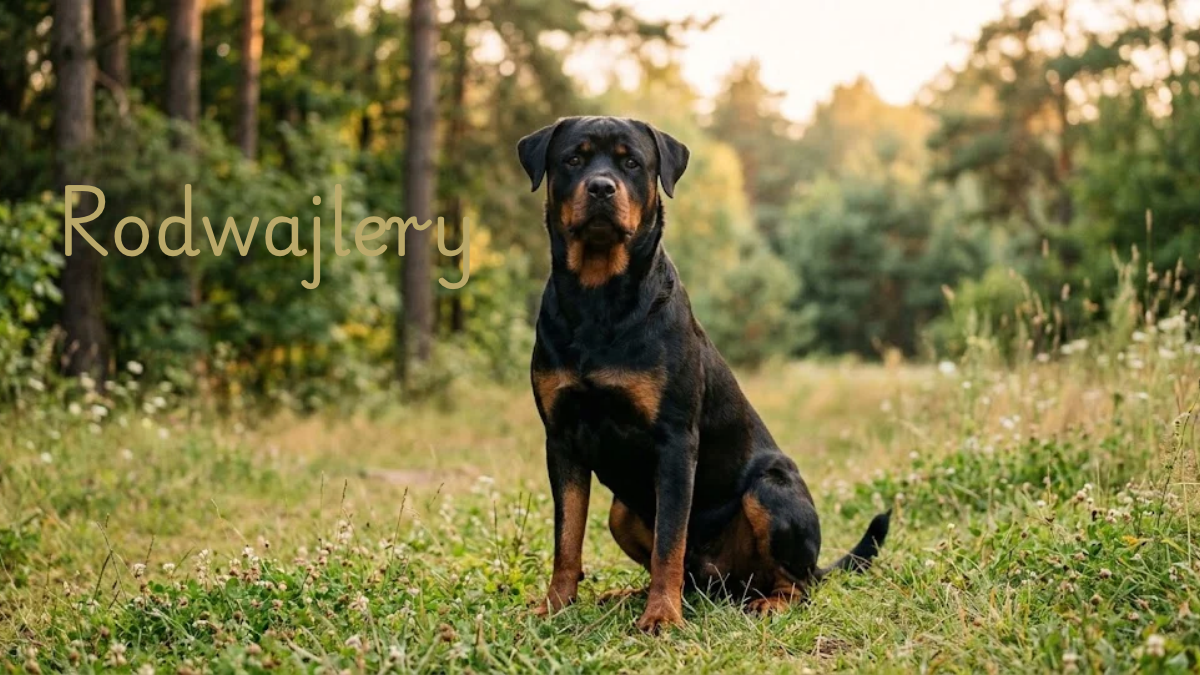
Rodwajlery is an informal, nonstandard spelling found online in connection with the Rottweiler, a strong German working dog breed. It is not established in the authoritative breed references reviewed as the name of a separate, officially recognized dog breed.
People searching for Rodwajlery may be trying to identify a dog, understand an unfamiliar spelling, or learn about the Rottweiler’s personality, history, training requirements, and suitability as a companion. The best starting point is understanding the distinction between the search term and the recognized breed name.
What Does Rodwajlery Mean?
The term Rodwajlery appears in online articles associated with Rottweilers. However, the available evidence does not establish a separate breed, official breed standard, or independently documented canine history under that name.
The recognized name used by major kennel organizations is Rottweiler. Therefore, when a search for Rodwajlery concerns a dog, the most useful approach is to explain the Rottweiler breed rather than invent a second breed identity.
The spelling alone also does not establish the origin, temperament, health, or pedigree of an individual dog. Anyone buying or adopting a dog should assess the actual animal and its records instead of relying on a name found online.
Understanding the Rottweiler Breed
The Rottweiler is a muscular, powerful working dog with a history connected to livestock driving and guarding in Germany. The breed developed around Rottweil, a town in southwestern Germany where cattle dealers and farmers needed capable dogs to move livestock and protect property. Rottweilers later became known for various working roles, including police and other service activities.
Today, Rottweilers can be companions as well as working dogs. Their intelligence, confidence, and protective instincts can make them rewarding partners for owners who understand their needs.
However, a breed’s history does not determine every dog’s personality. Individual temperament is affected by inherited traits, early experiences, socialization, training, and environment.
What Do Rottweilers Look Like?
Rottweilers have a compact, powerful build, broad heads, strong bodies, and short coats. The traditional coat is black with clearly defined tan, rust, or mahogany markings.
The American Kennel Club gives the following approximate adult size ranges:
| Characteristic | Male | Female |
| Height at the shoulder | 61–69 cm | 56–64 cm |
| Weight | 43–61 kg | 36–45 kg |
| Typical life expectancy | Approximately 9–10 years for the breed | Approximately 9–10 years for the breed |
These measurements are approximate conversions of the published AKC ranges, not targets that every healthy dog must meet. Individual size varies, and body condition is more useful than weight alone when discussing whether a dog is healthy.
A well-proportioned Rottweiler should move comfortably and show strength without excessive bulk. Responsible breeders prioritize sound structure and health rather than breeding dogs simply to look larger or more intimidating.
What Is a Rottweiler’s Temperament?
A well-bred and properly socialized Rottweiler can be calm, affectionate, confident, and attentive. Many form close bonds with their families, while their natural guarding instincts can make them more reserved around unfamiliar people.
Their size and strength do mean that responsible ownership matters. A large dog that jumps on visitors, pulls hard on a lead, or guards food can become difficult to manage without appropriate training.
It is also inaccurate to assume that every Rottweiler is dangerous or that every dog of this breed will automatically protect its owner. Individual behavior varies. Good management, humane training, appropriate socialization, and supervision are essential to developing reliable behavior.
How Should You Train and Socialize a Rottweiler?
Training should begin early and continue throughout the dog’s life. Rottweilers are intelligent and capable learners, but their adult strength makes it particularly valuable to establish good manners before unwanted habits become difficult to manage.
Begin with practical skills such as responding to their name, sitting, settling calmly, walking on a lead, coming when called, and waiting at doors. Keep training sessions manageable and reward the behaviors you want to encourage.
Early socialization should involve positive, controlled experiences with different people, environments, sounds, and other dogs. Introductions should be appropriate for the puppy’s age and vaccination status, with veterinary guidance where necessary.
Avoid using intimidation or rough handling as substitutes for training. Consistent rules, suitable rewards, patient repetition, and professional help when necessary are more constructive approaches. If a dog displays serious aggression, fear, or guarding behavior, seek assistance from a qualified behavior professional and your veterinarian.
Exercise and Mental Stimulation Requirements
Rottweilers are active working dogs that benefit from regular physical activity and tasks that engage their minds. Walking, supervised play, scent games, obedience exercises, and suitable interactive activities can help satisfy these needs.
The Royal Kennel Club lists more than two hours of daily exercise as a breed guideline. Actual requirements vary with the dog’s age, health, fitness, and individual temperament.
Puppies require a different approach from healthy adults. Their exercise should be age-appropriate, and strenuous jumping or repetitive high-impact activity should be avoided while they are developing. A veterinarian can help owners choose an appropriate plan.
Exercise should also be safe and controlled. Use a secure lead where needed, supervise interactions with unfamiliar dogs, and provide fresh water and opportunities to rest. A dog that seems unusually tired or uncomfortable should not be pushed to complete an exercise target.
Feeding, Grooming and Health Care
Feeding and nutrition
Choose a complete, balanced dog food appropriate for the dog’s life stage and health requirements. Portion sizes should account for activity, body condition, and the food’s nutritional content rather than relying on a fixed amount for every Rottweiler.
Monitor weight regularly and avoid excessive treats. Fresh water should always be available. Any home-prepared diet should be developed with veterinary guidance to help ensure that it meets nutritional needs.
Grooming
The Rottweiler’s short coat is relatively straightforward to maintain. Weekly brushing helps remove loose hair and gives owners an opportunity to check the skin, ears, and coat. Shedding can increase seasonally.
Nails, teeth, and ears also need routine attention. Introduce grooming gradually, especially to puppies, so handling becomes a familiar part of everyday care.
Health screening
Rottweilers can be affected by inherited or other health conditions, and no individual dog is guaranteed to remain healthy throughout life. The American Kennel Club identifies hip and elbow evaluations, cardiac examinations, eye evaluations, and testing for juvenile laryngeal paralysis and polyneuropathy (JLPP) among relevant breed health checks.
People considering a puppy should ask breeders for the appropriate health-testing records for both parents and discuss what the results mean with a veterinarian. Routine veterinary examinations, preventive care, appropriate nutrition, and maintaining a healthy body condition are also important.
Breed-level risks do not mean that every Rottweiler will develop a particular condition. Individual health depends on multiple factors, including genetics and lifelong care.
Are Rottweilers Suitable for Families?
A Rottweiler may suit a family that can provide companionship, training, exercise, supervision, and appropriate space for a large dog. Many become affectionate household companions when their needs are met.
Nevertheless, the breed is not an effortless choice for every household. Potential owners should consider whether they have enough time for daily care, the ability to manage a strong adult dog, and access to suitable training and veterinary services.
Interactions with children should always be supervised. Children should learn not to disturb a dog that is eating, sleeping, frightened, or seeking space. Similar care is needed when introducing a Rottweiler to other pets, because compatibility depends on the individual animals and how introductions are managed.
A secure home environment can help, but a yard is not a replacement for exercise, training, and human companionship.
How to Choose a Healthy Rottweiler
Choosing a dog responsibly involves more than selecting a puppy with attractive markings or an impressive appearance. Ask the breeder about the parents’ temperament, relevant health screenings, veterinary records, and the puppy’s early environment.
Look for clear answers rather than pressure to make an immediate purchase. A responsible breeder should be willing to explain the puppy’s background and discuss the ongoing responsibilities of ownership. Adoption through a reputable rescue organization is another option.
In either case, evaluate the individual dog. Ask about its behavior around people and other animals, any known medical concerns, and what support is available after the dog goes home. If buying a pedigree puppy, verify its documentation with the relevant registry instead of assuming that a particular label proves its ancestry.
Is a Rottweiler the Right Dog for You?
A Rottweiler may be an excellent match for an owner who values an active, intelligent, and closely bonded companion and is prepared to manage a powerful dog responsibly. The breed’s strengths are most rewarding when paired with appropriate training, exercise, health care, and social interaction.
The word Rodwajlery is best treated as a search term connected with the Rottweiler, not as proof of another breed. Before choosing a dog, focus on verified breed information, reliable health records, individual temperament, and the care you can realistically provide. These factors offer a much better basis for a decision than an unfamiliar spelling or a breed’s reputation alone.
Comparison Table
The most useful comparison is between the keyword and the established breed name.
| Factor | Rodwajlery | Rottweiler |
| Usage in the sources reviewed | Nonstandard online spelling linked to the breed | Established breed name |
| Separate recognized breed established by the evidence reviewed? | No | Yes, as documented by kennel organizations |
| Best use in the article | Explain the search term | Provide accurate breed information |
The distinction concerns terminology, not two different types of dogs.
Conclusion
Rodwajlery is a search term associated with the Rottweiler, a powerful and intelligent dog breed known for its strength, loyalty, and working abilities. Understanding the correct breed name helps readers find reliable information about its characteristics, temperament, training, and care requirements. However, owning a Rottweiler involves more than appreciating its appearance; it requires consistent training, regular exercise, proper nutrition, and responsible health care. Anyone considering this breed should focus on the individual dog’s temperament, health background, and suitability for their lifestyle. With proper preparation and responsible ownership, a Rottweiler can become a valued and well-adjusted companion.
You may also like: Pomerusky
FAQs
Is Rodwajlery a real dog breed?
Rodwajlery appears online as a nonstandard spelling associated with the Rottweiler. The authoritative breed references reviewed recognize the Rottweiler, not a separate breed called Rodwajlery.
Does the Rodwajlery spelling indicate a special type of Rottweiler?
No reliable evidence reviewed establishes a distinct type of Rottweiler based on this spelling. The spelling alone cannot establish a dog’s pedigree, health, or temperament.
Are Rottweilers suitable for first-time dog owners?
Some first-time owners may be capable of meeting the breed’s needs, but its size, strength, exercise requirements, and need for consistent training demand careful consideration. A prospective owner should assess their time, experience, resources, and access to qualified training support.
What health checks should a Rottweiler breeder provide?
Ask about appropriate health screenings for the parents, including hip and elbow evaluations, heart and eye assessments, and relevant genetic testing. The screening plan depends on the breeding program and your veterinarian’s advice.
Can a Rottweiler live indoors as a family companion?
Yes. Rottweilers can live as household companions when their physical and social needs are met. Indoor living should be combined with exercise, training, enrichment, and responsible supervision.
Share this content: