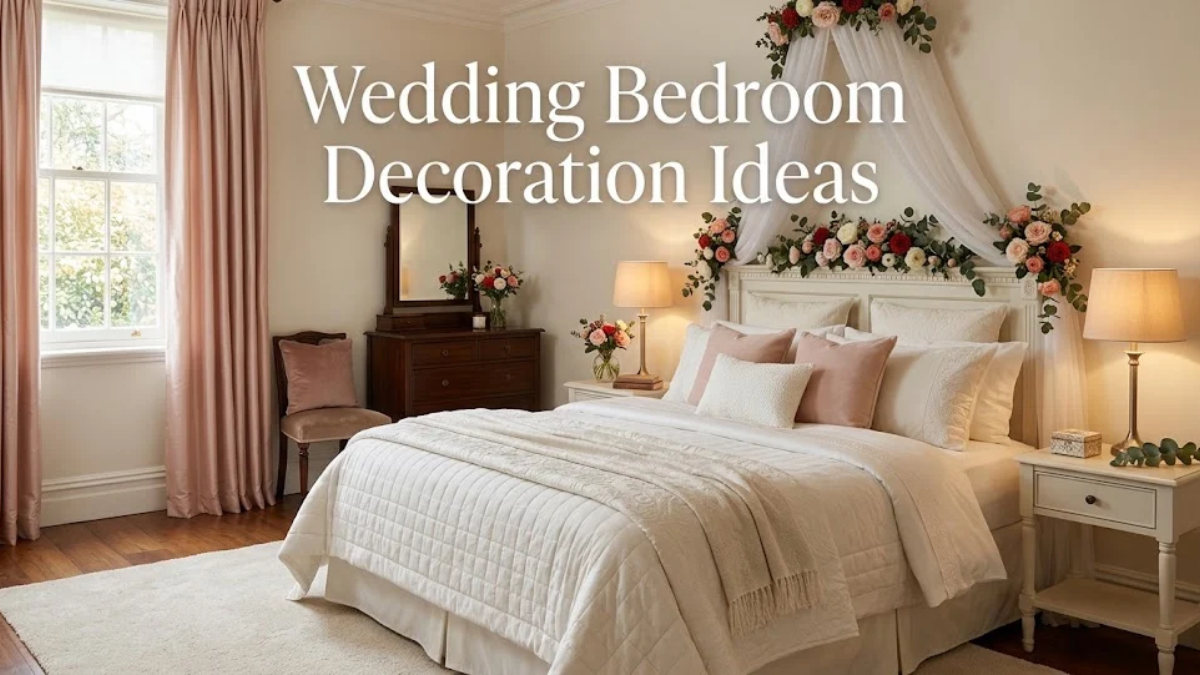
Wedding bedroom decoration ideas work best when they make the bed the visual focal point and then build around it with coordinated flowers, soft lighting, beautiful bedding, and a few personal details. The goal is not to cover every surface with decorations; it is to create a romantic, comfortable room that still feels spacious and intentional.
Start With the Bed as the Main Focal Point
The bed is usually the largest and most noticeable piece of furniture in the bedroom, so it is the natural starting point for wedding decoration. Instead of decorating every wall equally, give the bed wall the strongest visual treatment.
A floral arrangement above or around the headboard can create a traditional romantic effect. A fabric canopy can produce a softer, more dramatic look, while a clean headboard with carefully arranged flowers may suit a modern bedroom better.
A useful rule is to choose one hero decoration for the bed. That hero element might be a flower arrangement, canopy, fabric backdrop, illuminated headboard, or carefully styled bedding. Other decorations should support it rather than compete with it.
Choose a Color Palette Before Adding Decorations
Color decisions become easier when the room follows a simple palette of two or three main tones.
White and blush pink create a soft and elegant appearance. White with deep red feels more traditional and dramatic. Ivory, beige, champagne, and warm gold can create a classic luxury look without making the room feel overly colorful.
For a modern bedroom, neutral bedding can provide a calm foundation while flowers or cushions introduce the wedding colors. This approach also makes it easier to remove the temporary wedding decorations later without the whole bedroom looking mismatched.
The important point is consistency. Flowers, cushions, curtains, bedding, and small accessories do not all need to match exactly, but they should belong to the same visual family.
Use Flowers Where They Create the Most Impact
Flowers are one of the most recognizable elements of wedding bedroom decoration, but more flowers do not automatically create a better result.
Concentrate floral decoration in places that naturally attract attention. The headboard, bedside tables, dresser mirror, or a small arrangement near the entrance can be more effective than scattering flowers across the entire room.
Fresh roses can provide a classic wedding look, while softer floral combinations can make the room feel contemporary. Jasmine and other fragrant flowers may also be appropriate for a traditional South Asian setting, depending on personal preference and availability.
Fresh flowers should be planned carefully because temperature, water, handling, and time can affect their appearance. Artificial flowers can be useful when the decoration needs to remain in place for longer or when easier cleanup matters more than fragrance.
Decide Whether a Canopy or Masehri Fits the Room
A canopy can instantly change the character of a wedding bedroom. A sheer fabric canopy creates an airy, romantic effect, while a more elaborate masehri or saij setup can give the room a strongly traditional bridal appearance.
The room itself should determine how much structure you add. A tall ceiling and generous floor space can handle a more dramatic canopy. In a smaller bedroom, a lightweight fabric arrangement around the bed may achieve a similar effect without visually shrinking the room.
Avoid blocking windows, ceiling fans, air-conditioning units, wardrobes, or normal walking paths simply to create a decorative effect. A beautiful setup still needs to function as a bedroom.
Make Lighting Soft, Warm, and Layered
Lighting can change the appearance of the same decorations dramatically.
A harsh overhead light can make flowers, bedding, and fabrics look flat. Softer lamps, warm decorative lights, or carefully positioned fairy lights usually create a more intimate atmosphere.
Do not depend on a single string of lights to decorate the entire room. A more balanced approach is to use ambient room lighting as the base and then add small decorative light sources around the bed or headboard.
Candles can create a traditional romantic atmosphere, but they introduce an open-flame safety issue. Battery-operated candles or enclosed decorative lights can provide a similar visual effect with fewer practical concerns, especially when fabrics and flowers are close to the bed.
Let Bedding and Textiles Finish the Look
Bedding is often overlooked because attention goes to flowers and lights first, yet it occupies a large portion of the visual field.
Crisp white, ivory, blush, deep red, or other coordinated bedding can reinforce the wedding color palette. Layering a comforter or duvet with a throw and a few decorative cushions can create depth without requiring many additional decorations.
Do not cover the bed with so many cushions and petals that the room becomes difficult to use. The bedroom should photograph well, but it should also remain comfortable for the couple.
Curtains can complete the look when their color or texture relates naturally to the bedding. If the room already has strong curtains, there may be no need to replace them simply for the wedding.
Adapt the Decoration to a Small Bedroom
Small rooms benefit most from restraint.
Choose the bed as the main focal point, keep the floor largely clear, and use vertical space carefully. A simple floral headboard arrangement, warm lighting, coordinated bedding, and one decorative accent can be enough.
Mirrors can help a room feel more open, but they should be placed for practical reasons rather than simply adding another decorative object. Likewise, a narrow arrangement on a bedside table may work better than a large centerpiece that reduces usable space.
For small bedrooms, the strongest wedding bedroom decoration ideas are often the ones that remove unnecessary objects rather than adding more.
Make a Large Bedroom Feel Elegant Instead of Empty
Large bedrooms create the opposite problem. Too little decoration can make a wedding setup feel disconnected, especially when the bed occupies only part of the room.
Use the bed as the central anchor and then create secondary points of interest. A small seating area, coordinated side-table arrangement, decorative bench, or carefully styled dresser can help the larger room feel complete.
The trick is to repeat colors and materials rather than repeating identical decorations. For example, the same flower colors can appear around the bed and on a dresser, while the lighting remains slightly softer in secondary areas.
Traditional and Modern Wedding Bedroom Styles
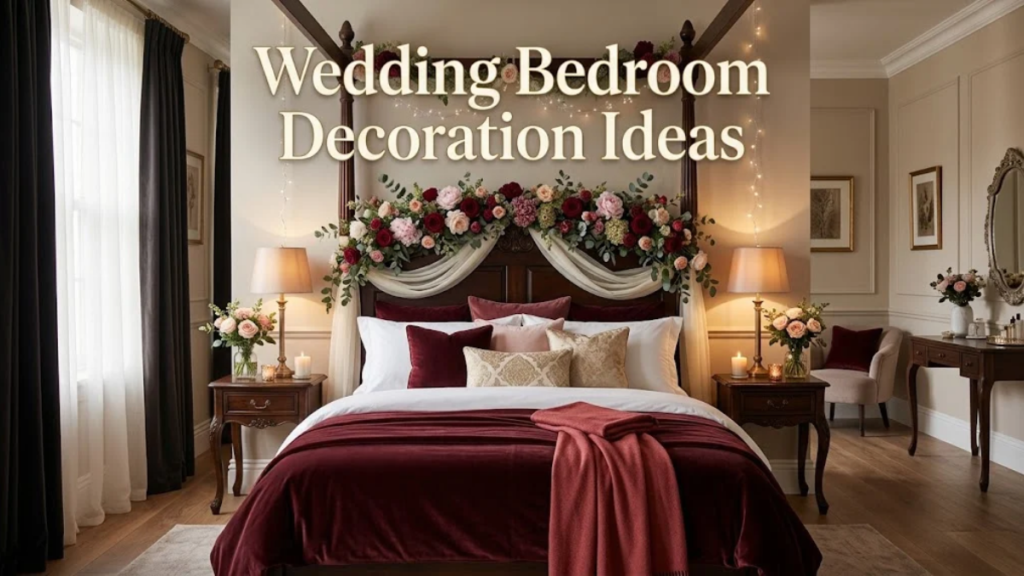
A traditional wedding bedroom often uses richer colors, flowers, decorative fabrics, ornamental details, and a more elaborate bed arrangement. In Pakistan and other South Asian settings, familiar bridal-room elements such as floral decoration and masehri-style canopies may be part of the expected aesthetic.
A modern setup usually removes some of the visual complexity. Neutral bedding, fewer flowers, warm lighting, clean lines, and one strong focal point can create an elegant result without looking formal or heavily decorated.
Neither approach requires a fixed formula. A room can combine traditional flowers with modern bedding, or a classic canopy with minimal decoration elsewhere.
Common Decoration Mistakes to Avoid
One common mistake is trying to decorate every visible surface. This makes the room look busy and makes the main focal point harder to notice.
Another is using too many unrelated colors. Red flowers, gold fabrics, bright cushions, colorful balloons, strong lighting, and patterned bedding can compete for attention when they are all introduced together.
Scale is another overlooked issue. Very large floral arrangements can overwhelm a small room, while tiny decorations may disappear in a large bedroom.
Practical problems matter too. Decorations should not block doors, switches, ventilation, wardrobes, windows, or normal movement around the bed.
A Simple Three-Zone Method for Planning the Room
A useful way to design the room is to divide it into three visual zones.
The hero zone is the bed and headboard. This gets the strongest decorative element.
The support zone includes bedside tables, the dresser, mirror, or seating area. These areas repeat the colors or materials from the hero zone in smaller amounts.
The breathing zone is the open space that remains undecorated. It may seem insignificant, but it prevents the room from feeling crowded and allows the main decoration to stand out.
This three-zone approach is an easy way to decide what to remove when the room starts feeling overloaded.
Which Wedding Bedroom Setup Should You Choose?
For a small room, choose a simple bed-centered setup with light colors, limited flowers, and minimal floor decoration. For a larger room, add one or two coordinated secondary areas rather than filling every corner.
Choose a traditional look when cultural elements, richer colors, floral decoration, or a masehri-style arrangement are important to you. Choose a modern look when you prefer clean lines, neutral colors, subtle flowers, and less visual clutter.
The most successful wedding bedroom is not necessarily the one with the most decorations. It is the one where the bed, colors, lighting, textiles, and supporting details work together and still leave enough space for the room to function normally.
Conclusion
Wedding bedroom decoration ideas are the ones that match the room, the couple’s style, and the atmosphere they want to create. Start with the bed as the main focal point, choose a simple color palette, and then add flowers, soft lighting, bedding, and a few carefully selected accents.
For a small bedroom, keep the decoration light and uncluttered. For a larger room, use coordinated secondary areas to make the space feel complete. Traditional elements such as floral arrangements or a masehri can create a cultural and festive atmosphere, while neutral colors, warm lighting, and minimal décor offer a more modern appearance.
You may also like: Oppein Wardrobes
FAQs
Is more decoration always better for a wedding bedroom?
No. A strong focal point with controlled supporting details can look more elegant than covering the entire room with flowers, lights, fabrics, and accessories.
Should I avoid flowers in a wedding bedroom?
No, but the type and amount should match the room. Fresh flowers add fragrance and a natural appearance, while artificial flowers can be more practical for long setups or repeated use.
Can wedding bedroom decorations affect the room long term?
Temporary decoration normally does not need to change the bedroom permanently. A practical approach is to make bedding, lighting, and a few furnishings work after the wedding while using removable elements for the main celebration.
What practical detail do people often overlook?
Access. Decorations should not block wardrobes, windows, switches, ventilation, doors, air-conditioning, or walking space around the bed.
How do I choose between a traditional and modern setup?
Start with the room and your existing furniture. A traditional setup suits richer colors, floral arrangements, and canopy-style decoration, while a modern setup works well with neutral bedding, fewer decorative elements, warm lighting, and cleaner lines.
Share this content: