
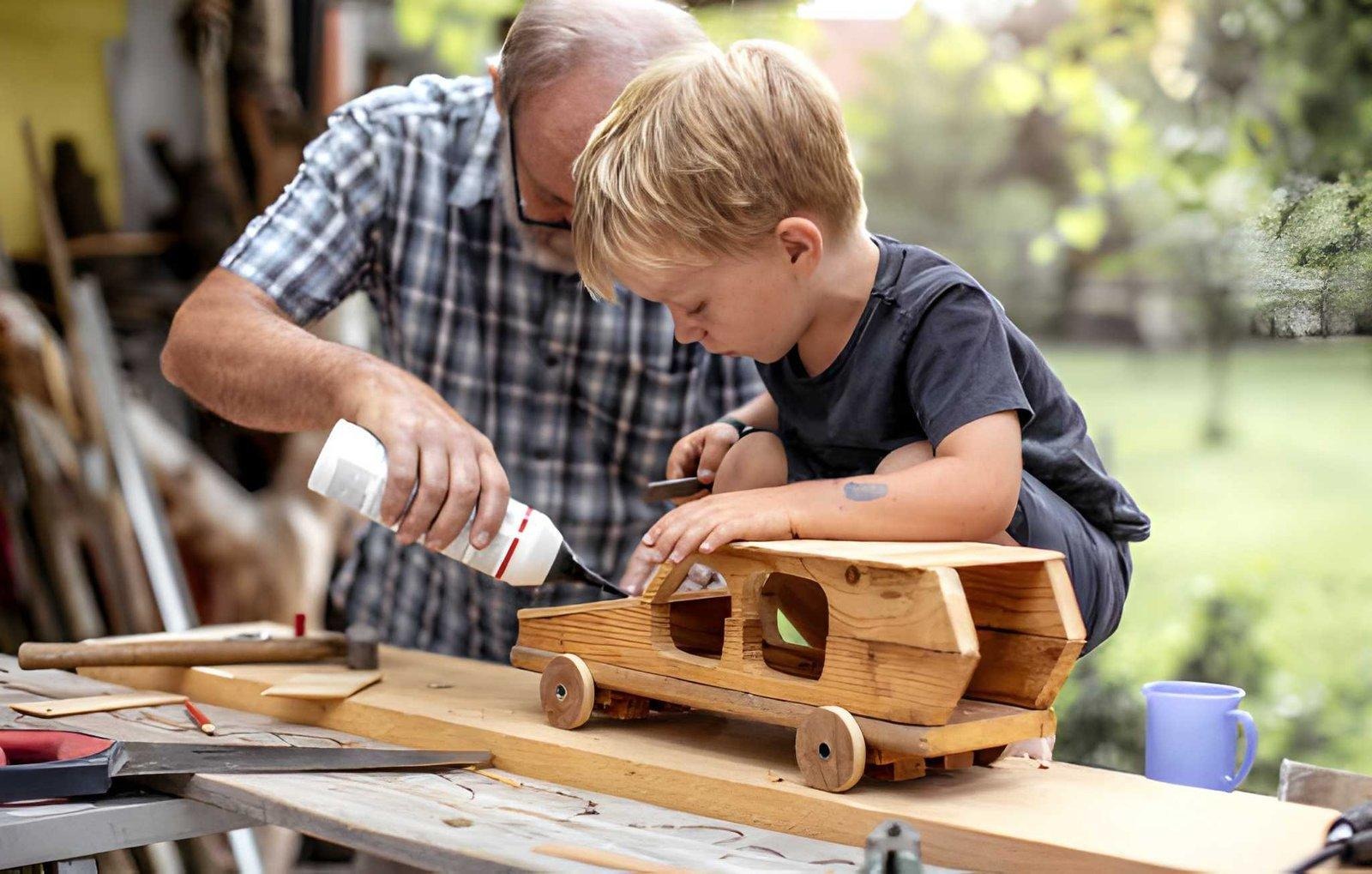
Ask someone how they spend their evenings and you will learn something they did not intend to tell you. Not because the answer is embarrassing — most people’s evenings are entirely ordinary — but because the specific way a person chooses to spend the hours that belong entirely to them, with no professional obligation attached and no audience to perform for, is the most honest available signal of what they actually value. The person who spends their evenings on car model making is telling you something specific: that the sustained, detailed attention required to accurately research, select, and commission a precision replica of a vehicle they care about is, for them, a genuinely satisfying way to spend time that could have been spent on anything else.
This is not a small thing. The evening hours are the only part of the day that most people control completely — no meetings, no deliverables, no other person’s agenda determining how the time is used. The activities chosen to fill them are the truest expression of preference available in a day that is otherwise heavily structured by obligation. Which makes the evening hobbies and collecting interests of the people around us the most reliable window into who they actually are, rather than who their professional lives require them to be.
What Sustained Attention Reveals — and Why It Matters
There is a meaningful distinction between activities that pass time and activities that use it. Television passes time — it is designed to require the minimum possible active engagement from its viewer while delivering the maximum possible passive stimulation. Social media passes time through the same mechanism at higher frequency. Both are legitimate uses of evening hours and both serve a genuine recovery function for people whose working days are cognitively demanding. But neither reveals much about the person doing them, because both are available equally to everyone and require no specific knowledge, taste, or skill to access.
The activities that use time are different. They require specific knowledge to do well, produce a tangible result that accumulates across sessions, and reward the investment of attention with outcomes that passive consumption cannot generate. The person who spends three evenings a week over several months researching the correct livery configuration of a specific aircraft type, identifying the most accurate available replica, and building a display that documents their aviation interest with the specificity it deserves is using their evening time in a way that compounds — each session adding to a body of knowledge and a physical display that did not exist before the interest began.
The distinction matters culturally because the activities that use time produce the objects, the collections, and the knowledge that define a person’s interior life rather than their public one. The shelf that accumulated across five years of serious engagement with a subject tells a more complete story about its owner than any social media profile or professional biography. It is the evidence of sustained private attention — the hardest thing to fake and the most reliable indicator of genuine interest.
The Culture of Precision — Why Certain Evening Hobbies Produce Certain Kinds of People
The people who collect scale models seriously — who spend their evenings researching subjects, verifying accuracy, and building displays that reflect a specific and considered position on automotive or aviation history — tend to share characteristics that are more consistent than the hobby’s niche reputation might suggest. They are almost always people whose professional lives involve sustained attention to detail, tolerance for complexity, and comfort with the long-term investment that produces results not immediately visible. The surgeon who collects WW2 aviation subjects. The architect who builds a display of significant automotive designs across five decades. The engineer whose home office holds a set of precisely made ship models documenting the age of sail’s most significant vessels. The pattern repeats across professions.
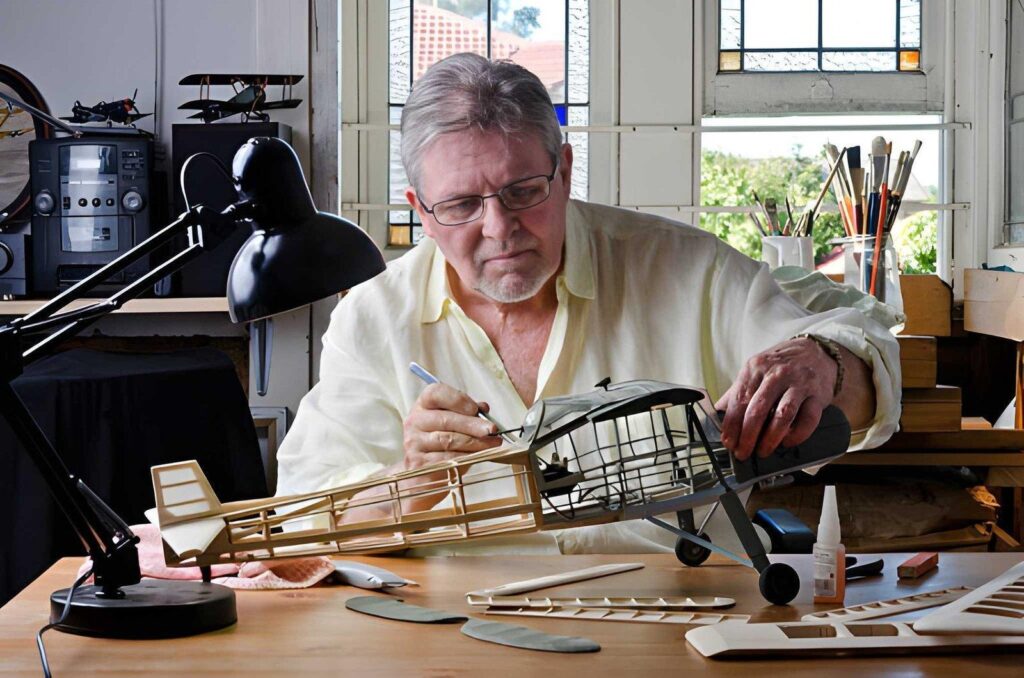
Among the collecting traditions that most consistently attract this kind of person, aviation subjects — and particularly wooden airplane models produced through the hand-carving tradition — occupy a specific position. The hand-carved wooden replica requires more specific research, more exacting standard-setting, and more sustained engagement with the subject than any production die-cast alternative. The collector who chooses a hand-carved wooden aircraft replica over the equivalent production piece is choosing, at a material level, to have an object that carries evidence of human attention in its surface. That preference is the same preference that drives the professional excellence of the people who consistently make it.
The Model Plane on the Desk — and the Story It Tells Without Saying Anything
Every model plane on a desk is a private argument made public by its presence in a shared space. The person who placed it there did not do so for decoration — the aviation collecting community’s standards for accuracy and specificity make generic decoration an unsatisfying outcome for anyone who has spent serious time with the subject. They placed it there because it references something specific: a professional identity, a chapter of sustained engagement with aviation history, or a personal relationship with a specific aircraft type that the replica keeps permanently within daily reach.

The visitor who notices the model plane and asks about it gets a conversation that the room’s other objects — the functional furniture, the standard electronics, the generic art — would never have generated. The model is a conversation starter not because it is unusual but because it is specific. It invites the question of why this aircraft, in this livery, at this scale — and the answer to that question is always more interesting than anything the room’s other contents might have prompted.
The evening hours are the only part of the day that belong entirely to the person living them. What people choose to do with them — and what they choose to keep on the shelves and desks that accumulate those choices over years — is the most honest self-portrait most of us will ever produce.
The Broader Cultural Argument — Why This Tradition Is More Relevant Now Than It Has Been for Decades
The scale model collecting tradition is experiencing a quiet revival that the hobby’s niche reputation has obscured. The same cultural recalibration that has driven renewed interest in craft objects, handmade things, and the kind of sustained attention that digital convenience has made optional is driving a new generation of collectors toward automotive and aviation subjects with the same seriousness that previous generations brought. The difference is that today’s collector has more access to historical reference material, more options for commission and customisation, and a more developed sense of what specificity requires — which makes the collections being assembled now, across car model making, aviation collecting, and maritime subjects, among the most historically accurate and most personally significant ever produced.
The evening hours spent on those collections are not a retreat from contemporary life. They are its most deliberate counterpoint — the sustained, specific, self-directed attention that the rest of the day makes increasingly difficult to practise. The shelf that results from those evenings is not a hobby display. It is the evidence of a person who decided, repeatedly and voluntarily, to pay the kind of attention that produces something worth keeping. In any room, and in any era, that evidence is worth noticing.
Frequently Asked Questions
What does car model making involve at a serious collector level?
At a serious collector level, car model making involves researching the specific subject — the correct variant, the correct colour and configuration for the period being documented, and the accuracy standards required to represent the vehicle honestly — before selecting or commissioning the replica that best meets those standards. It is less about the act of physical assembly than about the sustained engagement with the subject that produces the knowledge to make good collecting decisions. The physical piece is the end product of that engagement, not the beginning of it.
Why are wooden airplane models considered a premium collecting choice?
Wooden airplane models are produced through a hand-carving process that requires more skill, more time, and more specific attention to the subject than production die-cast or injection-moulded alternatives. The finished piece carries evidence of human making in its surface — the grain beneath the paint, the surface transitions shaped by a maker’s decisions rather than a mould’s geometry — that production pieces do not replicate. They also age better than die-cast alloys, which are susceptible to corrosion over time, making them the most durable long-term display option available for aviation subjects.
Why do serious professionals tend to be drawn to precision scale model collecting?
Because the qualities that serious scale model collecting requires — sustained attention to detail, tolerance for complexity, comfort with long-term investment in outcomes that are not immediately visible — are the same qualities that tend to produce professional success in demanding fields. The collecting interest and the professional excellence are expressions of the same underlying disposition rather than separate activities. The surgeon’s scale model collection and the surgeon’s operating theatre performance draw on the same patience, the same standard-setting, and the same refusal to accept close enough when better is achievable.
The Evening Hours — and What They Build
The evenings spent on car model making, aviation research, and the slow accumulation of a display that reflects a specific and considered position on the machines that matter most are not time away from a life. They are, in an important sense, the life — the part that belongs entirely to the person living it, that produces results that compound across years, and that leaves behind physical evidence of what genuine attention looks like when it is applied voluntarily and repeatedly to something that genuinely matters.
The shelf that results from those evenings tells a story. It is always the truest one available.
Share this content: