
In today’s digital world, data is the backbone of almost every business. From cloud computing and telecom systems to enterprise IT networks, everything depends on stable, organized, and efficient server infrastructure. As demand grows, choosing the right physical setup becomes more important than ever.
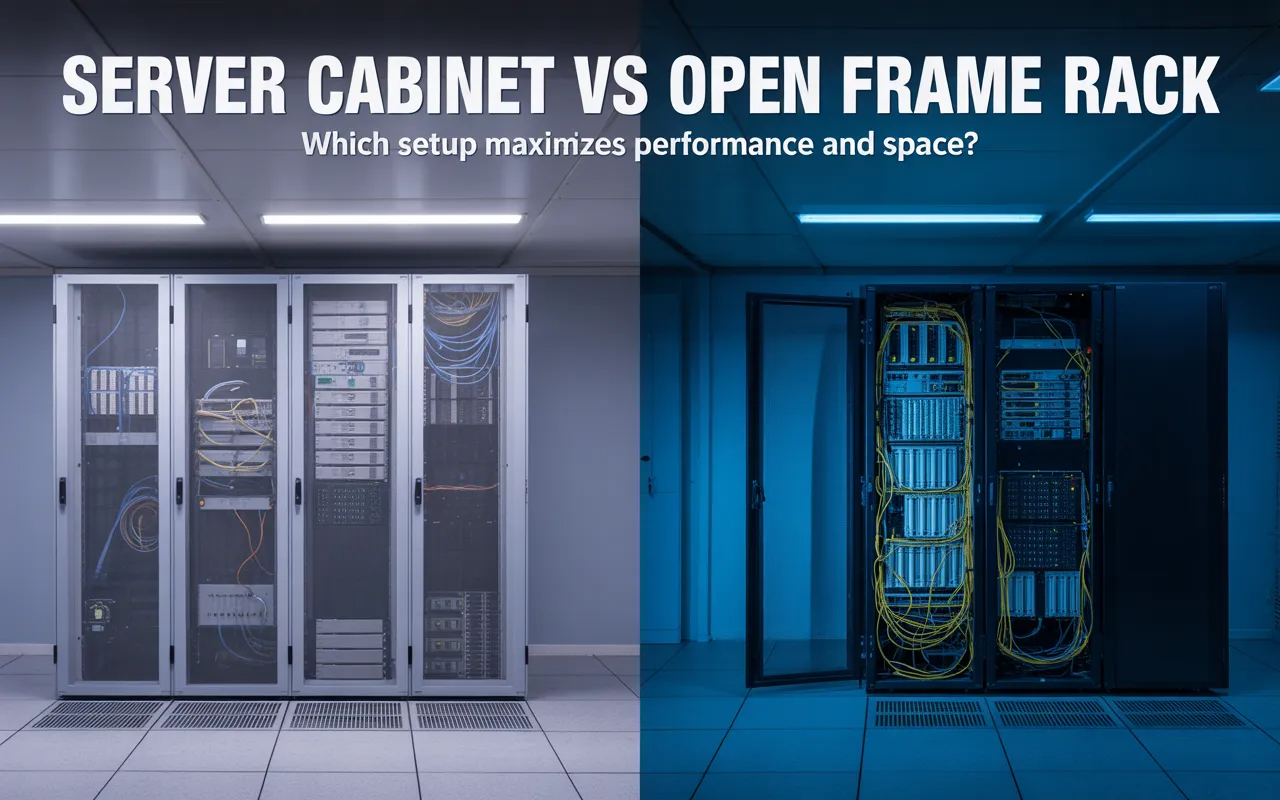
Two of the most common choices are the network server cabinet and the open frame server rack. Both serve the same basic purpose—housing and organizing servers—but they differ significantly in design, protection, airflow, space usage, and overall performance.
Understanding these differences is essential if you want to build a reliable and scalable IT environment.
Why Server Infrastructure Design Matters
Modern servers generate a lot of heat and require careful organization. Poor setup can lead to:
- Overheating and system failure
- Cable clutter and maintenance difficulty
- Reduced airflow and performance issues
- Security vulnerabilities
A well-planned server environment improves efficiency, reduces downtime, and makes future expansion easier. That’s why choosing between a cabinet and a rack is not just a design decision—it directly impacts performance.
What Is a Network Server Cabinet?
A network server cabinet is a fully enclosed structure designed to house servers, networking equipment, and storage devices. It provides physical protection and controlled airflow, making it ideal for environments where security and stability are important.
A typical cabinet includes:
- Lockable doors for security
- Ventilation or cooling fans
- Adjustable mounting rails
- Cable management systems
These cabinets are widely used in data centers, telecom rooms, and enterprise IT setups where equipment protection is a priority. For example, solutions like the indoor network server cabinet are designed to keep critical systems safe while maintaining efficient airflow and organization.
What Is an Open Frame Server Rack?
An open frame server rack is a minimal structure that supports servers without enclosing them. It usually consists of a metal frame with vertical posts where equipment is mounted.
Unlike cabinets, open racks are completely exposed, which allows:
- Maximum airflow
- Easy access to equipment
- Simplified installation and maintenance
A common example is the 22U 2-post open frame server rack, which is often used in controlled environments where security is not a major concern but accessibility and cooling efficiency are important.
Comparing Performance: Cabinet vs Open Frame
Both systems have strengths, but their performance depends on the environment and use case.
Airflow and Cooling
Open frame racks offer superior natural airflow because there are no walls restricting air movement. This makes them ideal for high-density server setups where heat management is critical.
Server cabinets, on the other hand, rely on built-in cooling systems. While slightly more controlled, they may require additional fans or air conditioning in high-load environments.
Security and Protection
This is where cabinets clearly win. A network server cabinet provides physical protection from dust, accidental damage, and unauthorized access. This makes it ideal for offices, data centers, and public-facing environments.
Open racks are exposed, meaning equipment is more vulnerable. They are best used in secure server rooms where access is controlled.
Space Efficiency
Open frame racks take up less physical space and are easier to install in tight environments. However, cabinets offer better organization and vertical stacking options, which can improve long-term scalability.
Network Server Cabinet: A Closer Look
A network server cabinet is designed for environments where reliability, security, and structured cable management are essential. It is particularly useful in enterprise networks where multiple systems need to operate together without interference.
Check Also: Home Energy Storage Solutions: Choosing the Right Residential Energy Storage Battery for Reliable Power
These cabinets help:
- Protect sensitive hardware from dust and external damage
- Reduce noise levels in office environments
- Organize complex cabling systems neatly
- Improve overall system stability
Because they are enclosed, they also provide better control over environmental factors such as temperature and humidity.
Open Frame Server Rack: A Closer Look
An open frame server rack is all about simplicity and accessibility. It is widely used in testing labs, development environments, and small data centers where speed and flexibility matter more than protection.
The key advantages include:
- Faster installation and upgrades
- Easier access for maintenance
- Better airflow for cooling efficiency
- Lower cost compared to enclosed cabinets
However, because the equipment is exposed, it requires a clean and controlled environment to avoid dust and physical damage.
Which One Maximizes Performance?
The answer depends on your needs.
If your priority is:
- Security
- Structured organization
- Controlled environment
Then a network server cabinet is the better choice.
If your priority is:
- Maximum airflow
- Easy access
- Flexible installation
Then an open frame server rack may be more suitable.
In many modern IT environments, both solutions are used together depending on system requirements.
Energy Efficiency and Cooling Considerations
Cooling is one of the biggest challenges in server management. Poor airflow leads to overheating, which can reduce system performance and lifespan.
Open racks naturally perform better in passive cooling environments. Cabinets, however, can be optimized with advanced cooling systems and airflow management techniques, making them suitable for high-density setups.
Final Thoughts
Both the network server cabinet and the open frame server rack play important roles in modern IT infrastructure. Each offers unique advantages depending on the environment, security needs, and performance requirements.
Cabinets provide protection, structure, and stability, making them ideal for secure and controlled environments. Open racks offer flexibility, airflow, and accessibility, making them perfect for dynamic or development-focused setups.
Ultimately, the best choice depends on balancing performance, space, and long-term scalability. In many cases, combining both solutions across different areas of an IT system can deliver the most efficient and reliable results.
As data demands continue to grow, choosing the right server infrastructure is no longer optional—it is a critical step toward building a strong, future-ready digital foundation.
Share this content: