
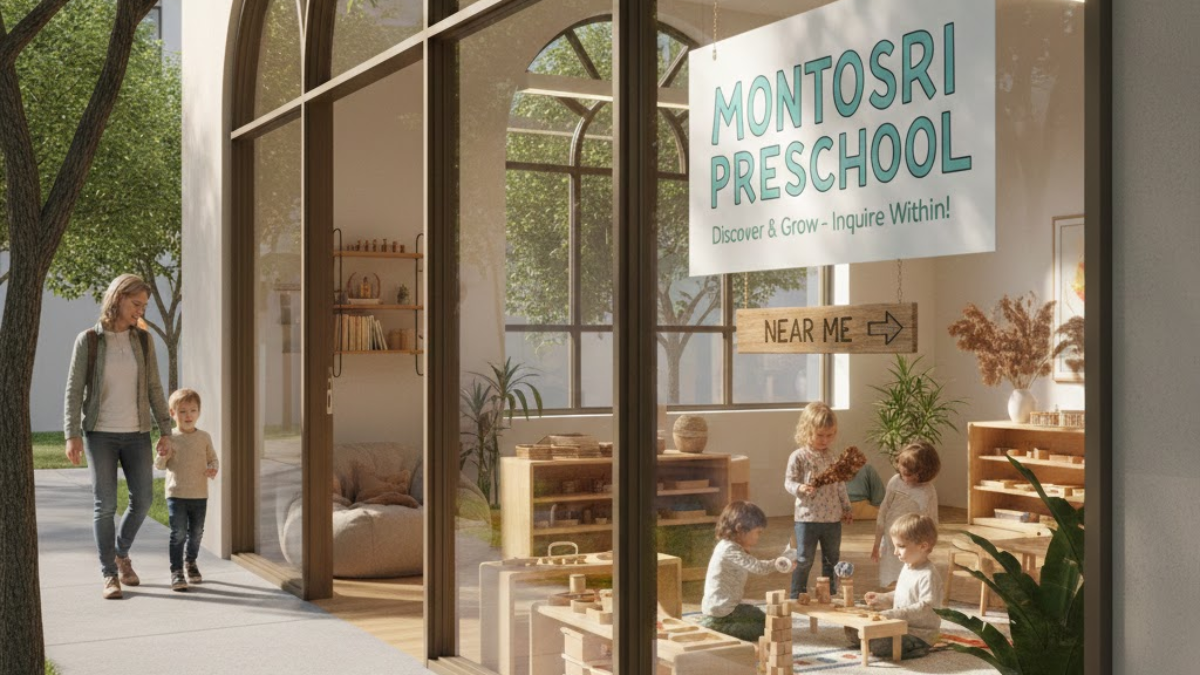
You want a Montessori preschool near me that matches your family’s values, schedule, and your child’s learning style. Search for programs that emphasize hands-on learning, independence, and certified Montessori-trained teachers to find a preschool that will support your child’s curiosity and development.
As you explore preschool near me options, focus on location, classroom atmosphere, teacher credentials, and how the school blends Montessori methods with any added elements like STEM or arts. The article will guide you through practical steps to compare schools, spot quality indicators, and weigh benefits of choosing a local Montessori program.
Choosing the Right Montessori Preschool
Look for a classroom that prioritizes independence, hands-on learning, and mixed-age grouping. Check teacher credentials, daily routines, and the materials children use to confirm the school’s practice matches Montessori principles.
Key Features of Montessori Education
You should see child-sized furniture and clearly organized learning areas for practical life, sensorial, language, math, and cultural studies. Children work with tactile, sequential materials (like bead chains or sandpaper letters) that build skills progressively.
Expect mixed-age classrooms (typically 3-year spans) so older children mentor younger ones and you observe fewer teacher-led whole-group lessons. The teacher acts as a guide, preparing the environment and intervening minimally to foster concentration and self-correction.
Observe a calm, purposeful atmosphere where children choose activities, move freely within limits, and repeat tasks until mastery. Daily routines emphasize independence: pouring, dressing, and care-of-self skills are part of learning.
How to Evaluate Local Montessori Programs
Visit during drop-off or work time; watch 20–30 minutes without entering the room to see authentic classroom flow. Take notes on child engagement, material use, and transitions rather than relying on brochures or marketing language.
Ask specific questions: How do teachers introduce new materials? What is the child-to-teacher ratio? How do staff handle conflicts and challenging behavior? Request sample daily schedules and examples of individual learning plans.
Compare several schools using consistent criteria. Create a checklist covering environment, observation results, communication with families, outdoor time, and fee structure. Prioritize the items that matter most to your family, such as bilingual instruction or before/after care.
Accreditation and Teacher Qualifications
Check for accreditation by recognized Montessori organizations (e.g., AMI, AMS) and for licensing required by your province or state. Accreditation indicates adherence to Montessori standards but also review classroom practice directly.
Confirm teachers hold Montessori certifications for the age group they teach and relevant early childhood credentials—look for documentation and ask how long staff have taught in Montessori settings. Inquire about ongoing professional development and staff turnover rates.
Verify that at least one staff member per classroom is trained in child health and emergency procedures. Clear policies on background checks, supervision, and communication with families should be available in writing.
Benefits of Attending a Montessori Preschool Near Me
You’ll find practical advantages that affect daily routines, learning progress, and family involvement. Expect clearer routines, focused materials for specific skills, and opportunities for real parental participation.
Social and Academic Advantages
You develop independence through self-directed tasks like pouring, dressing, and choosing work. Those activities build fine motor skills and concentration, which translate to better focus during group lessons and transitions.
Mixed-age classrooms let you observe and model behaviors from older peers while practicing leadership with younger ones. That setting fosters cooperation, not competition, and strengthens verbal skills because children explain activities to one another.
Teachers act as guides who observe and adjust lessons to keep you challenged. You’ll encounter hands-on materials for math and language that move from concrete to abstract—helping you grasp counting, phonics, and early literacy with fewer rote drills.
Personalized Learning Environment
You receive lessons paced to your readiness, not a class timetable. If you pick up phonics quickly, your teacher offers more complex reading materials; if you need extra practice with scissor skills, they provide repeated, targeted exercises.
Class sizes and mixed ages create natural opportunities for one-on-one attention without pulling you out of the group. Observation-driven planning means your strengths and struggles inform daily activities and longer-term goals.
The classroom layout supports choice and routine: labeled shelves, tactile materials, and clear work areas let you move independently and return materials correctly. That structure builds responsibility and reduces frustration during tasks.
Community Involvement and Parental Engagement
You’ll find specific ways to participate: classroom work days, volunteer-led craft stations, and guided observation visits where you watch lessons and discuss progress with teachers. Those concrete options let you support learning without disrupting routines.
Teachers typically provide regular, evidence-based feedback through brief conferences, work journals, or portfolios that document your progress with samples and dates. That documentation gives you clear items to discuss and act on at home.
Local Montessori preschools often host community events—potlucks, book swaps, and skill-share evenings—that connect families and create practical support networks. You gain peers who trade childcare tips, recommend local resources, and coordinate playdates that reinforce classroom learning.
Share this content: