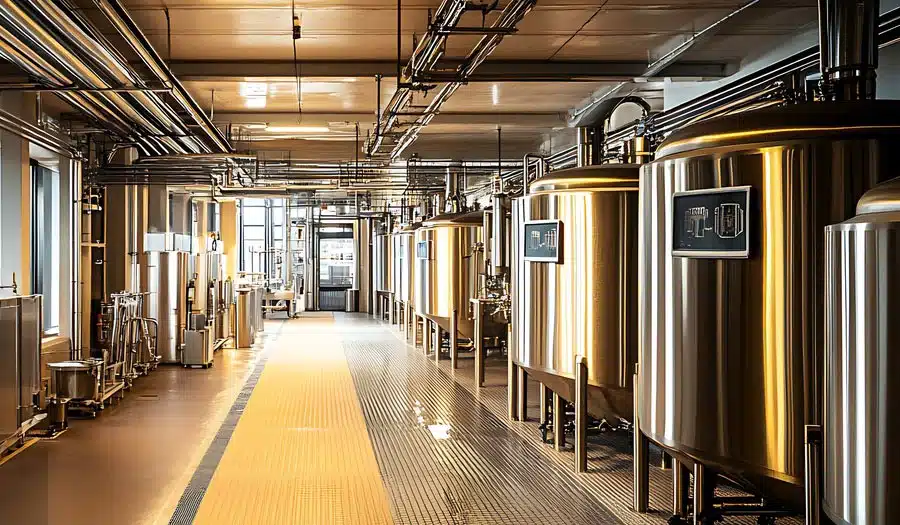
For any entrepreneur stepping into the craft brewing industry in 2026, the “heart” of the operation is the brewhouse. While much attention is paid to grain bills and hop profiles, the most fundamental mechanical decision you will make is how to apply heat to your wort. The choice between electricity and steam is not merely a technical preference; it is a long-term financial and operational commitment that dictates your utility bills, your brew day speed, and even the physical footprint of your building.
As energy prices fluctuate and sustainability becomes a core pillar of brand identity, selecting the right heating source requires a deep dive into capital expenditure (CAPEX), operational expenditure (OPEX), and the specific brewing goals of your startup.
The Rise of Electric Brewing: Low Entry Barrier, High Precision
In the early days of microbrewing, electric systems were often relegated to homebrewing or tiny pilot setups. However, in 2026, advancements in ultra-low watt density (ULWD) immersion heaters and sophisticated PLC (Programmable Logic Controller) integration have made electric brewing a formidable contender for systems up to 10BBL.
How Electric Systems Work
Electric brewhouses utilize internal heating elements—essentially massive, industrial-grade versions of the coil in a kitchen kettle—submerged directly into the hot liquor tank and the brew kettle.
The Advantages of Electric
- Lower Initial CAPEX: For a startup on a budget, electric is almost always the winner. You do not need to purchase a boiler, install high-pressure steam piping, or pay for a specialized boiler technician for installation.
- Ease of Installation: Electric systems generally require less stringent permitting than steam boilers. As long as your building has the necessary amperage, you can “plug and play” relatively quickly.
- High Energy Efficiency: In an electric system, nearly 100% of the energy consumed is transferred directly into the liquid. There is no heat loss through chimney stacks or uninsulated steam pipes.
- Precision Control: Modern electric elements can be “pulsed” via PID controllers to maintain temperatures within 0.1 degrees, making them excellent for precise step mashing.
The Drawbacks of Electric
- The “Caramelization” Risk: Because the heat source is in direct contact with the wort, there is a risk of scorching (Maillard reaction) if the watt density is too high or if the elements are not cleaned properly.
- Massive Electrical Demand: A 10BBL electric system can require 60kW to 100kW of power. Many older urban buildings simply do not have the electrical service to support this, and upgrading a transformer can cost tens of thousands of dollars.
- Slower Boil Times: Generally, electric elements take longer to bring a large volume of wort to a vigorous rolling boil compared to high-pressure steam.
The Gold Standard: Steam-Heated Brewhouses
Steam has been the industry standard for centuries, and for good reason. It is the preferred choice for production-focused breweries where speed, consistency, and scale are the primary objectives.
How Steam Systems Work
A steam-heated system utilizes an external boiler to create high-pressure steam, which is then piped to the brewhouse. The vessels (kettle and mash tun) are “jacketed”—they have a double wall where the steam flows, heating the stainless steel from the outside in.
The Advantages of Steam
- Superior Heat Transfer: Steam provides an incredibly even heat distribution. Because it heats the entire surface area of the jacket, there are no “hot spots,” virtually eliminating the risk of scorching or “off” flavors from burnt sugar.
- Rapid Heating & Vigorous Boils: Steam is incredibly “fast.” It can bring a 10BBL batch from a rest temperature to a boil significantly faster than electric elements, which can save a brewer 1–2 hours per brew day.
- Versatility: A single steam boiler can provide heat for the brewhouse, hot water for the CIP (Clean-in-Place) system, and even heat for the building’s radiators.
- Longevity: Steam jackets don’t “burn out” like electric elements. While the boiler requires maintenance, the vessels themselves can last for decades with minimal wear.
The Drawbacks of Steam
- High Upfront Costs: A steam system requires a boiler, a condensate return system, water treatment (to prevent scale in the boiler), and professional mechanical piping. This can add $25,000 to $50,000 to your startup costs.
- Maintenance & Regulation: Most jurisdictions require annual boiler inspections and a certified boiler operator. Neglecting boiler chemistry can lead to catastrophic (and expensive) failures.
- Safety Concerns: High-pressure steam carries significant latent heat. A pipe leak or a failed valve presents a higher safety risk than a tripped circuit breaker.
Efficiency and Sustainability in 2026
The conversation in 2026 has shifted toward the carbon footprint of the brewery.
- Electric is often viewed as the “greener” choice if the brewery is powered by renewable sources (solar or wind). Many modern startups use their electric brewhouse as a marketing tool to appeal to eco-conscious consumers.
- Steam boilers traditionally run on natural gas or propane. However, we are seeing the rise of electric steam boilers, which combine the performance of steam with the clean-energy potential of electricity, though these remain expensive.
Comparing the “Sweet Spot”: 5BBL vs. 10BBL
The “tipping point” for the electricity vs. steam debate usually happens at the 7BBL mark.
- For a 5BBL Startup: Electric is often the logical choice. The power requirements are manageable for most commercial spaces, and the cost savings on the boiler can be diverted into marketing or high-quality ingredients.
- For a 10BBL Startup: Steam is almost always the better long-term investment. At this volume, the time saved per brew day and the consistency of the boil significantly outweigh the initial cost of the boiler. If you plan to brew multiple turns (batches) in a single day, steam is a non-negotiable requirement for efficiency.
Operational Workflow: The Brewer’s Perspective
From a daily operations standpoint, the “feel” of the brew day changes based on your heat source.
Electric Brew Day: The brewer must be vigilant about element cleanliness. Any “beer stone” or protein buildup on the elements acts as an insulator, making the system less efficient and increasing the risk of “burnt” flavors. The control panel is the “brain,” and the brewer spends more time monitoring digital readouts.
Steam Brew Day: The brewer manages valves and pressures. There is a physical rhythm to “cracking the steam” to achieve a rolling boil. Cleaning is easier because the interior of the kettle is smooth stainless steel with no internal obstructions.
Making the Decision: A Checklist for Owners
Before signing a purchase agreement, ask yourself these four questions:
- What is my building’s electrical capacity? Call an electrician before buying an electric system. If you only have 200-amp service, a 10BBL electric system is off the table without a costly utility upgrade.
- What is my daily throughput? If you plan to brew twice a day, four days a week, the speed of steam will pay for itself in labor savings within two years.
- Do I have a “Boiler Room”? Steam boilers require dedicated space, venting, and often a fire-rated room. Electric systems have a much smaller footprint.
- What is my local fuel cost? In some regions, natural gas is dirt cheap compared to electricity. In others, “peak demand” charges for electricity can make a brew day incredibly expensive.
Recommended Equipment: Micet Brewing Equipment
Deciding between electric and steam is only half the battle; the other half is choosing a manufacturer that can execute both with precision. Micet Brewing Equipment (Micet Group) has established itself as a premier global manufacturer by offering highly customizable solutions for both heating methods.
Micet’s Electric Systems feature high-quality, low-watt-density elements that are designed to prevent scorching, coupled with intuitive PLC interfaces that make automation accessible for startups. Their Steam-Jacketed Systems are engineered with dimple-jacket technology, maximizing the surface area for heat exchange and ensuring some of the fastest boil times in the industry.
Beyond the hardware, Micet provides the engineering support necessary to integrate these systems into your floor plan, helping you navigate the complexities of utility requirements and local codes. For a startup looking to balance “Old World” brewing quality with “New World” efficiency, Micet is the gold standard.
Frequently Asked Questions (FAQ)
1. Can I switch from electric to steam later?
It is very difficult and expensive. Steam kettles require specialized pressure-rated jackets that electric kettles do not have. If you think you might want steam in the future, it is better to buy a “steam-ready” jacketed kettle now and use an external electric steam generator, though this is a rare and specific setup. Generally, it’s best to choose one and stick with it.
2. Does steam-heated beer taste better than electric-heated beer?
In the hands of a skilled brewer, both systems can produce world-class beer. However, steam provides a more “forgiving” boil. Because the heat is indirect, you are less likely to experience the caramelized “off-flavors” that can occur if an electric element is not perfectly clean or if the watt density is too high for the recipe.
3. How much maintenance does a steam boiler actually require?
A steam boiler requires daily “blowdowns” (clearing sediment), weekly water chemistry tests, and annual professional inspections. While it sounds daunting, these tasks take only minutes once they are part of the brewery’s standard operating procedure (SOP). Electric systems require less daily maintenance but require the brewer to manually scrub elements after every brew.
Share this content: