

In today’s fast-moving digital world, the ability to think clearly has become more valuable than ever. Practicing critical thinking exercises helps individuals strengthen analytical thinking, improve decision-making skills, and build confidence when facing complex choices. Whether you are a student, professional, or lifelong learner, developing strong critical thinking skills allows you to evaluate information carefully, avoid cognitive bias, and make smarter, more informed decisions.
Learning how to improve critical thinking is not about memorizing facts but about building habits that support logical reasoning, problem-solving skills, and objective thinking. With proven methods like The 5 Whys, Six Thinking Hats, and Argument Mapping, you can train your brain to analyze situations, question assumptions, and reach logical conclusions. Over time, these structured critical thinking activities enhance mental clarity, boost confidence in decision-making, and support both personal and professional growth.
50 Activities for Developing Critical Thinking Skills
In today’s fast-changing digital world, where fast information, online claims, and constant opinions surround us, mastering critical thinking exercises is no longer optional — it’s essential. Whether you’re a student aiming for academic success, a professional handling workplace decision-making, or someone seeking personal growth, strong critical thinking skills help you make smarter, more confident choices.
Learning how to improve critical thinking doesn’t require complicated tools. With the right critical thinking activities, you can strengthen analytical thinking, sharpen logical reasoning, and develop decision-making skills that support both personal and professional success. This guide explores the importance of critical thinking, practical exercises, and daily habits that help you develop critical thinking skills naturally.
What Is Critical Thinking?
Critical thinking is the ability to analyze information, apply logical reasoning, and make informed decisions based on evidence-based thinking rather than assumptions. It combines objective thinking, reflective thinking, and structured reasoning to help you understand situations clearly before acting.
Strong critical thinking skills allow you to:
- Evaluate evidence instead of believing everything you hear
- Recognize cognitive bias and avoid emotional reactions
- Use rational thinking to reach logical conclusions
- Improve communication skills and clarity
In simple terms, critical thinking teaches you how to think logically and make better decisions in both personal and professional life.
Why Is Critical Thinking Important?
The importance of critical thinking lies in its ability to transform confusion into clarity. In a world full of misinformation and social media information, strong thinking skills protect you from poor decisions and misleading content.
Benefits of critical thinking:
- Supports workplace decision-making and leadership
- Improves problem-solving skills and creative problem-solving
- Enhances confidence in decision-making
- Strengthens communication skills and teamwork
- Encourages adaptability and self-trust
By practicing critical thinking exercises for adults and critical thinking exercises for students, you build a mindset focused on structured decision-making and long-term success.
How Can Activities Help Develop Critical Thinking Skills?
Practicing critical thinking activities strengthens the brain just like physical exercise strengthens muscles. When you regularly analyze problems, your brain builds stronger neural connections and improves cognitive flexibility.
These exercises help:
- Improve mental clarity and mental discipline
- Enhance brain development and cognitive improvement
- Strengthen the prefrontal cortex, responsible for logic and planning
- Support long-term brain health
Over time, consistent practice helps you improve decision-making skills, process information faster, and make informed choices confidently.
8 Essential Critical Thinking Skills to Develop

To truly develop critical thinking skills, focus on these core abilities:
- Analytical thinking for breaking down complex ideas
- Open-mindedness to consider different viewpoints
- Problem-solving skills for real-life challenges
- Decision-making skills for structured reasoning
- Bias awareness to avoid emotional decisions
- Information literacy to verify reliable sources
- Logical thinking and analytical reasoning
- Perspective thinking for balanced judgment
These skills support professional growth, personal development, and smarter daily decisions.
How to Develop Critical Thinking Skills in 7 Steps
Follow these simple steps to improve critical thinking:
- Identify the problem clearly
- Gather accurate information
- Analyze information logically
- Consider multiple perspectives
- Evaluate options carefully
- Choose the most rational decisions
- Reflect and improve
This process strengthens structured thinking, builds confidence, and improves learning over time.
Common Mistakes When Practicing Critical Thinking Exercises
Even motivated learners make mistakes when using critical thinking exercises.
Avoid these pitfalls:
- Accepting the first answer without critical analysis
- Confusing fact vs opinion
- Ignoring bias detection and assumptions
- Overthinking instead of using objective thinking
- Practicing only during problems instead of daily
Consistent and mindful practice leads to stronger results.
Top Critical Thinking Exercises to Become a Better Thinker

These proven critical thinking exercises help build reasoning skills, improve problem-solving speed, and support better decisions.
The 5 Whys
The 5 Whys technique helps uncover the root cause analysis behind problems. By repeatedly asking “why,” you reach a deeper understanding and avoid surface-level solutions.
Six Thinking Hats
The Six Thinking Hats method encourages multi-angle thinking using structured perspectives. It improves structured decision-making and reduces bias.
Argument Mapping
Argument Mapping visually organizes claims and evidence, improving argument analysis, logical reasoning, and evidence-based thinking.
Fact vs. Opinion Sorting
This exercise builds information literacy and helps distinguish fact vs opinion, reducing the impact of misinformation.
You may also like: Client Relationship Partner
Decision Trees
Using a visual Decision Matrix or trees allows you to compare outcomes and make informed choices using structured reasoning.
Case Study Analysis
Analyzing real-world scenarios improves workplace decision-making, leadership skills, and creative problem-solving.
How to Practice Critical Thinking Daily
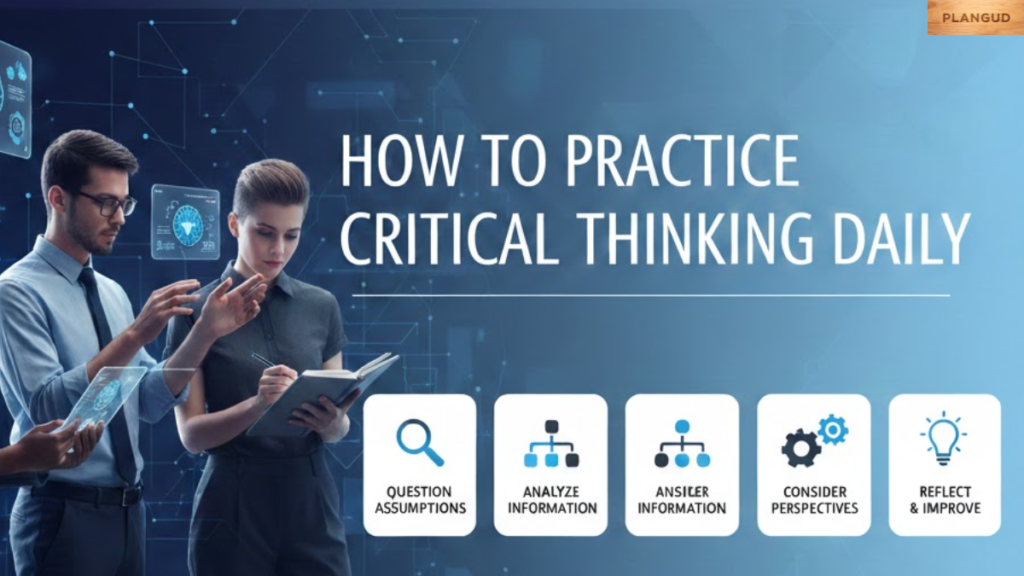
You can improve critical thinking with simple daily habits:
- Use the 5 Whys for everyday problems
- Question online claims and headlines
- Practice Perspective Switching in conflicts
- Apply Reverse Thinking to goals
- Use the Teach Back Method to explain ideas clearly
These small actions strengthen mental clarity, boost confidence, and improve daily life decision-making.
Conclusion
Developing strong critical thinking skills is one of the smartest investments you can make in yourself. With consistent practice of critical thinking exercises, you gain mental clarity, improve decision-making, and approach challenges with logic and confidence.
Whether you’re a student, professional, or lifelong learner, building this skill leads to better decisions, stronger communication, and lasting success. Many learners also enhance their progress through guided platforms like Tutorition, where structured support and expert feedback help sharpen thinking step by step.
FAQs
1. What are the best critical thinking exercises for beginners?
The best critical thinking exercises for beginners include the 5 Whys, fact vs. opinion sorting, and simple decision trees. These methods help you analyze information, question assumptions, and make logical choices without overcomplicating the process.
2. How do critical thinking exercises improve decision-making?
Critical thinking exercises train your brain to evaluate evidence, compare options, and avoid emotional reactions. Over time, this leads to clearer judgment, better problem-solving, and more confident, informed decisions in daily life.
3. Can adults really improve critical thinking skills with practice?
Yes, critical thinking is a learnable skill that improves with consistent practice. Adults can strengthen analytical thinking and reasoning by using structured exercises, reflecting on decisions, and challenging personal assumptions regularly.
4. How often should I practice critical thinking exercises?
Practicing a few minutes daily is more effective than occasional long sessions. Simple habits like questioning assumptions, fact-checking information, and analyzing decisions can gradually build strong critical thinking skills over time.
5. Why is critical thinking important in everyday life?
Critical thinking helps you evaluate information, avoid misinformation, and make smarter choices in work, finances, and relationships. It improves clarity, confidence, and your ability to handle complex situations logically.
Share this content: