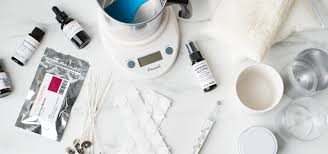
Candle making can be done for personal use, gifts, or small-scale sales. Whether you are a beginner or an experienced crafter, quality supplies are key to creating candles that burn well and meet your preferences. Understanding the basic supplies and how they affect your finished product will help you choose the right materials. Here’s a list of ideal candle making supplies:
Candle Waxes
One of the most basic candle making supplies is wax, and the type you choose shapes the final product. Different wax varieties vary in surface finish, burn time, and scent retention. The most common wax options are soy wax and natural beeswax. You can also use paraffin wax.
Soy wax is a low-melting, vegan-friendly option that simplifies the candle-making process, especially for beginners. Unscented by nature, it serves as a blank canvas, allowing fragrance oils to shine. Beeswax provides a more natural alternative, offering a gentle, sweet aroma and a high melting point that produces longer-burning candles.
Paraffin wax delivers a stronger scent throw, making it ideal for fragranced candles. Blending different waxes enhances both scent diffusion and structural stability, though it requires precise measurements to maintain a good balance. Using high-quality wax gives greater control over the candle-making process and produces a clean, even burn with minimal soot throughout the candle’s life.
Fragrance Oils
Fragrance oils formulated specifically for candles are designed to perform under the sustained heat of a burning wick. They define a candle’s scent profile, with common options ranging from light florals and fresh citrus to warm, spiced blends. Transparent gel wax requires fragrance oils specifically formulated for gel candles. These oils blend seamlessly without causing cloudiness, preserving the crystal-clear appearance that defines gel candles. Mixing different oils allows for custom scents and creative variations.
Candle Wicks
Wick selection determines how a candle performs from the first burn to the last. They are sized based on the interior diameter of the container or mold being used; match the wick types to your vessel dimensions and wax. A wick that is too thin burns incompletely, leaving a tunnel of unused wax down the center. One that is too thick generates excess smoke, soot, and an oversized flame that shortens the burn time.
For crackling wood wick jars, small tealights, or extra-large container candles, choose between cotton and wooden wicks. Cotton wicks burn cleanly and smoothly, making them a reliable choice. Wooden wicks create a warm, crackling flame and include booster wicks for stronger flames and metal clips to offer stability. Pre-waxed wicks simplify the process for beginners: they require little preparation, remain centered during pouring, and hold their position as the wax sets and cools.
Molds and Jars
Molds help in creating freestanding candles in various forms; they allow for a wide range of designs from pillars to other structured shapes. Silicone, plastic, and aluminum are common mold options. The type of mold you choose affects how easily you can remove the candle once it has cooled. The type of jar affects both a candle’s function and its heat management. Glass jars and metal tins withstand high temperatures, making them durable and safe choices. They contain the melted wax effectively and provide stable conditions for an even, controlled burn.
Get Your Candle Making Supplies
Every component in candle making, from the wax to the mold, contributes to the quality and consistency of the finished product. When you get your supplies from a dedicated supplier, you can save time that would otherwise be spent coordinating across multiple vendors and acquire premium ingredients. Find a reputable online vendor today and browse their available candle supplies to get started on your project.
Share this content: