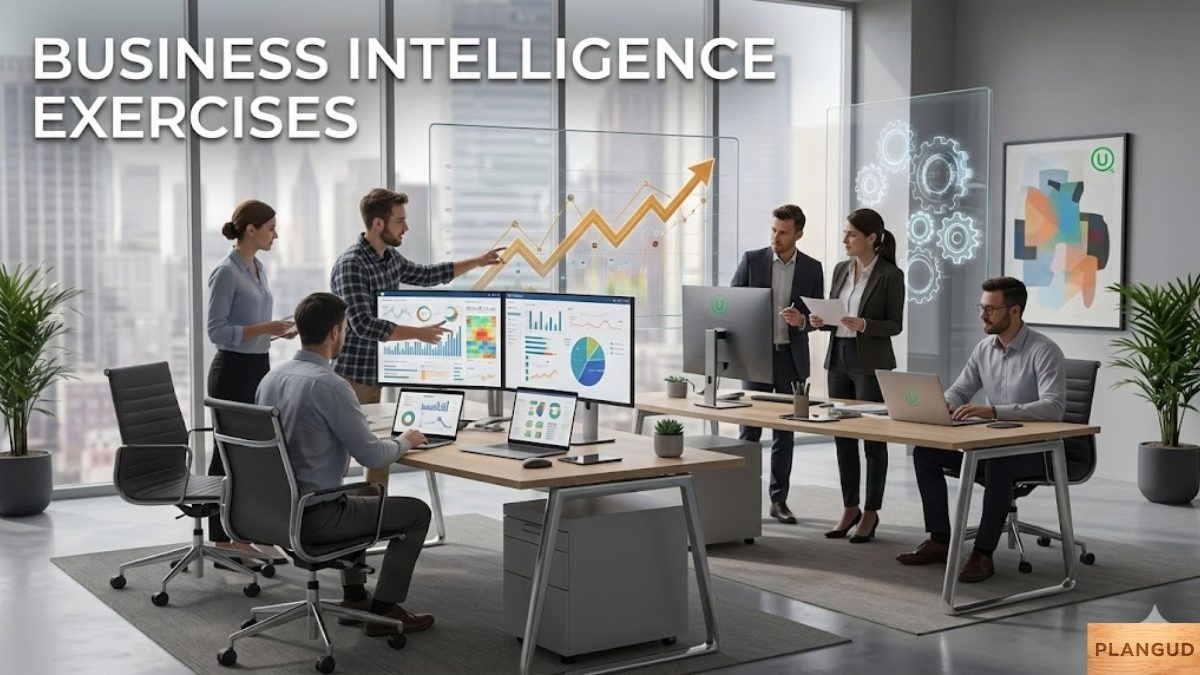
In today’s competitive environment, Business Intelligence Exercises are essential for professionals who want stronger analytical capabilities, better data-driven decision-making, and measurable impact in auditing and operations. Whether you are an Auditor, Data Analyst, or Finance Professional, structured BI practice improves audit process optimization, strengthens risk identification, and supports smarter reporting. Real-world organizations depend on Business Intelligence (BI) not just for dashboards, but for insight, governance, and strategic clarity. This guide explores how structured exercises build capability across reporting, compliance, analytics, and leadership decision-making.
What Are Business Intelligence Exercises?
Business Intelligence Exercises are structured, scenario-based activities that simulate real operational and audit challenges. They train professionals to perform data integration, improve data integrity, conduct performance evaluation, and support compliance audits.
In practice, these exercises often include building KPI dashboards, running data flow analysis, conducting report accuracy testing, and strengthening data governance. Unlike passive learning, these exercises emphasize interpretation, accountability, and business impact.
Why Business Intelligence Exercises Matter for Decision Making
Modern organizations rely on business reporting systems and real-time monitoring to maintain operational efficiency. However, tools alone do not guarantee insight. Structured exercises build the discipline required for developing a risk management framework and for sustainable audit automation.
When professionals repeatedly practice BI workflows, they improve:
- Risk Assessment accuracy
- User access control governance
- Structured dashboard development
- Effective stakeholder engagement
This transforms BI from reporting support into a strategic decision engine.
Core BI Foundations: Data Collection, Cleaning, and Modelling
Strong foundations determine whether BI delivers trust or confusion.
Effective data integration ensures that multiple systems communicate properly. Poor integration weakens analysis and limits visibility.
Maintaining data quality management standards improves confidence in reporting outputs. In many audit reviews, unresolved inconsistencies undermine trust.
Applying Data Warehousing and OLAP (Online Analytical Processing) techniques strengthens structured analysis. These technical foundations enable scalable business intelligence implementation and sustainable growth.
Categories of Business Intelligence Exercises
Exercises typically evolve across three maturity levels:
Foundational exercises build understanding of Data Visualization, KPI interpretation, and summary reporting.
Strategic exercises focus on risk identification, anomaly detection, and advanced performance diagnostics.
Advanced exercises incorporate Predictive Analytics, Machine Learning, and structured data mining to anticipate trends.
This progression supports professional growth while reinforcing audit readiness and governance maturity.
Beginner Business Intelligence Exercises (Foundational Skills)
At the beginner level, exercises emphasize clarity, structure, and control.
Participants often create revenue summaries, build introductory KPI dashboards, and conduct data visualization reviews to improve reporting accuracy. These exercises develop confidence in identifying performance trends and validating metrics.
For many Auditors and Compliance Officers, foundational BI practice also includes reviewing user access control policies and verifying structured reporting alignment.
Intermediate Business Intelligence Exercises (Analysis & KPIs)

Intermediate exercises move toward deeper evaluation and performance evaluation analysis.
Professionals analyze churn trends, profitability ratios, and operational bottlenecks while conducting structured data flow analysis. In auditing contexts, this level strengthens compliance audit readiness and supports audit automation workflows.
By applying structured KPI interpretation, professionals enhance their ability to align reporting outputs with business strategy.
Advanced Business Intelligence Exercises (Predictive & Risk Analysis)
Advanced exercises introduce forward-looking capabilities.
Using Predictive Analytics and Machine Learning techniques, professionals forecast revenue, detect fraud patterns, and simulate risk exposure scenarios. These activities improve the proactive risk management framework design.
Exercises often involve anomaly detection, scenario modelling, and deeper integration of data mining logic. At this level, BI shifts from descriptive analysis to predictive and prescriptive insight.
Dashboard Building and Data Visualization Practice
Effective dashboard development transforms complexity into clarity. Tools such as Microsoft Power BI, Tableau, Qlik Sense, and Looker enable interactive reporting and strong Real-Time Monitoring capabilities.
However, visualization must support governance. A structured data visualization review ensures dashboards align with business objectives and comply with internal standards.
In audit-focused environments, dashboards often support Compliance Audit tracking and structured reporting validation.
KPI Analysis and Performance Monitoring Exercises
KPI exercises strengthen operational discipline.
Monitoring KPIs (Key Performance Indicators) improves alignment with strategy. Combined with Real-Time Monitoring, teams can detect performance deviations early.
Exercises at this stage frequently include structured performance evaluation, access control reviews, and alignment with broader Data Governance policies.
Predictive Analytics and Forecasting Tasks
Forecasting strengthens strategic foresight.
By leveraging Predictive Analytics, historical patterns guide forward-looking decisions. Integrating Machine Learning enhances forecasting reliability and supports complex modelling.
In financial auditing contexts, predictive tasks strengthen risk identification and proactive mitigation strategies.
Customer Segmentation and Churn Analysis Exercises
Segmentation exercises apply data mining and behavioral analytics to group customers effectively. These exercises enhance insight into retention risk and profitability patterns.
By combining structured modelling with KPI dashboards, professionals create more targeted reporting for leadership review.
Industry-Based BI Case Studies (Retail, Healthcare, Finance)
In retail, BI exercises optimize inventory through real-time monitoring and performance diagnostics.
In healthcare, structured analysis strengthens compliance reporting and supports system security assessment oversight.
In finance, exercises emphasize fraud detection, regulatory reporting, and enhanced data governance alignment.
These real-world applications demonstrate how Business Intelligence in Auditing directly improves operational resilience.
You may also like: Oronsuuts
Common BI Tools Used in Exercises (Microsoft Power BI, Tableau, Qlik Sense, Looker)
Leading platforms such as Microsoft Power BI, Tableau, Qlik Sense, and Looker enable advanced dashboard development, interactive reporting, and structured data integration.
Organizations often rely on these Business Intelligence Tools to support scalable reporting and audit documentation. Mastery of these platforms enhances credibility across roles, including IT Professionals, Finance Professionals, and Project Managers.
How to Integrate BI Exercises into Your Workflow
To maximize value, organizations embed Business Intelligence Training into recurring reporting cycles.
Regular audit team training, structured practice reviews, and defined BI implementation strategy sessions reinforce consistency. Many organizations partner with BMC Training to deliver structured training and certification programs that support professional advancement.
Embedding BI practice into operational reviews strengthens long-term operational efficiency and governance.
Challenges in Business Intelligence Practice and How to Overcome Them
Common challenges include inconsistent data integration, poor data quality management, and limited executive adoption.
Overcoming these requires strong stakeholder engagement, defined objectives, and ongoing structured practice. Implementing a clear risk management framework ensures BI outputs align with compliance and governance expectations.
Conclusion
Business Intelligence Exercises strengthen not only reporting accuracy but also governance, compliance, and long-term strategic capability. By combining strong foundations in Data Warehousing, structured KPI evaluation, and advanced Predictive Analytics, professionals build durable expertise.
Whether using Microsoft Power BI, Tableau, or Qlik Sense, structured BI practice enhances analytical capabilities, supports Compliance Audits, and improves enterprise-wide data-driven decision-making.
FAQs
1. What are Business Intelligence Exercises in simple terms?
Business Intelligence Exercises are structured, practical activities that help professionals analyze data, build dashboards, and support data-driven decision making. Instead of just learning theory, you work on real scenarios like KPI tracking, risk analysis, and performance reporting. They are designed to improve practical BI skills that directly apply to business or auditing roles.
2. How do Business Intelligence Exercises improve auditing performance?
They strengthen risk identification, improve data integrity checks, and support more accurate compliance audits. By practicing structured analysis and automated reporting workflows, auditors reduce manual errors and increase audit efficiency. Over time, this leads to better governance and stronger decision support.
3. Do I need technical skills to start Business Intelligence Exercises?
Not necessarily. Beginner exercises focus on understanding KPIs (Key Performance Indicators), basic reporting, and simple data visualization using tools like Microsoft Power BI or Tableau. Advanced skills such as predictive analytics and machine learning can be developed gradually as experience grows.
4. Which BI tools are best for practicing real-world exercises?
Industry-standard tools like Microsoft Power BI, Tableau, Qlik Sense, and Looker are commonly used in professional environments. The best choice depends on your organization’s systems, reporting needs, and integration requirements. What matters most is learning how to apply the tool to solve real business problems.
5. How can I measure whether Business Intelligence Exercises are actually improving my skills?
You can measure improvement by tracking how confidently you interpret dashboards, explain performance trends, and identify operational risks. If your analysis leads to clearer insights, faster reporting, and stronger decision outcomes, your BI capability is growing. Real progress shows up in better business conversations, not just better visuals.
Share this content: